
As a business owner today, you may already be utilizing an existing chat service already, whether it be via website chat, WhatsApp, Instagram Direct Message (DM) or in-app messaging. Customers expect to receive quick responses from customer service and also expect them to provide accurate information. The ability to use AI chatbot technology for businesses can improve the way companies interact with their customers by providing better customer service and increased customer retention.
AI Chatbots are not simply a series of scripts like they once were; today’s chatbots can handle live customer inquiries, schedule appointments, retrieve information from knowledge bases, qualify leads, and escalate an inquiry to a human representative when necessary. The proper use of AI chatbot software can help companies save time, lower costs associated with providing customer support, and ultimately increase their conversion rates.
This guide will detail the various types of AI chatbot software available for businesses, their strengths and weaknesses, and which types of businesses would benefit most from each particular software solution. This guide will focus on the practical aspects of using AI chatbots to help you make a decision that fits the needs of your business.
What makes a good AI chatbot for Business
Prior to discussing the tools necessary to support chatbot development and deployment, it is of paramount importance to understand what criteria to consider when selecting a chatbot.
- Accuracy of responses – especially in regard to support-related use cases
- The trainer’s ability to customize the chatbot through the use of their own materials
- Ease of creating and customizing the chatbot
- Ability to seamlessly integrate into the existing technology stack within an organization
- Transparent pricing that allows for easy growth with the organization
- A streamlined process for transitioning customers from the chatbot to human Customer Service Agents
It is essential that businesses consider their primary purpose when selecting a chatbot solution, as not all chatbots will be suited for every company; however, there are several different types of chatbots available that cater to a variety of needs.
1. CustomGPT.ai
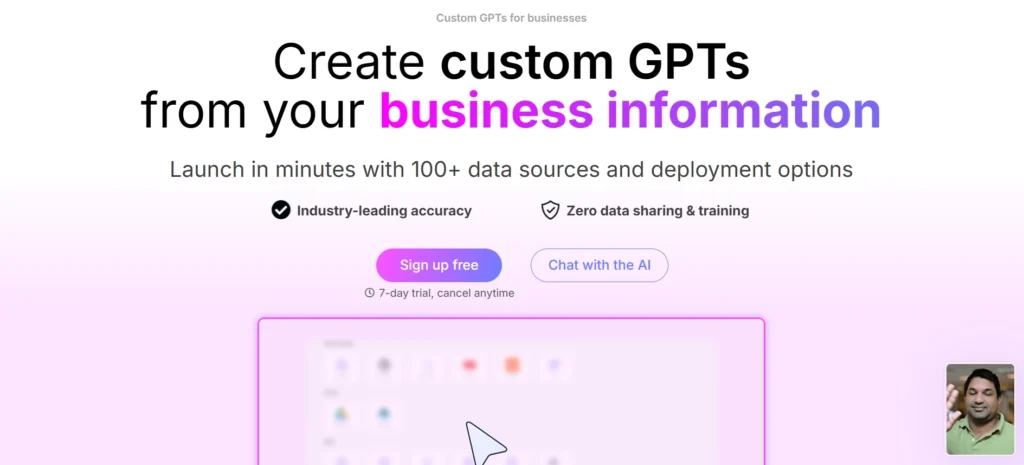
CustomGPT.ai allows you to create chatbots using your content for training. Content can include documents, help center content, PDFs, and even entire websites. It also has a unique feature of accuracy and transparency.
Every answer provided by the chatbot includes clickable citations back to where it came from, allowing the user to verify the source of their answer. This feature is very uncommon and extremely helpful when building trust.
Key Features include:
- No-code builder for custom bots
- Train on your files or URLs
- Use GPT-4 to Generate Responses
- Source citations for all their answers
- Access to API for embedding the chatbot
Pricing: Starts at $99 per month and will scale with usage and features with an enterprise level available for larger teams
Who is it For? Businesses with many knowledge bases, SaaS companies, marketing firms, and educators who are looking for specific information from their own content.
Affiliate Note: CustomGPT is an affiliate partner. If you register using our affiliate link, we will earn a commission without you paying any extra for it.
2. Intercom Fin
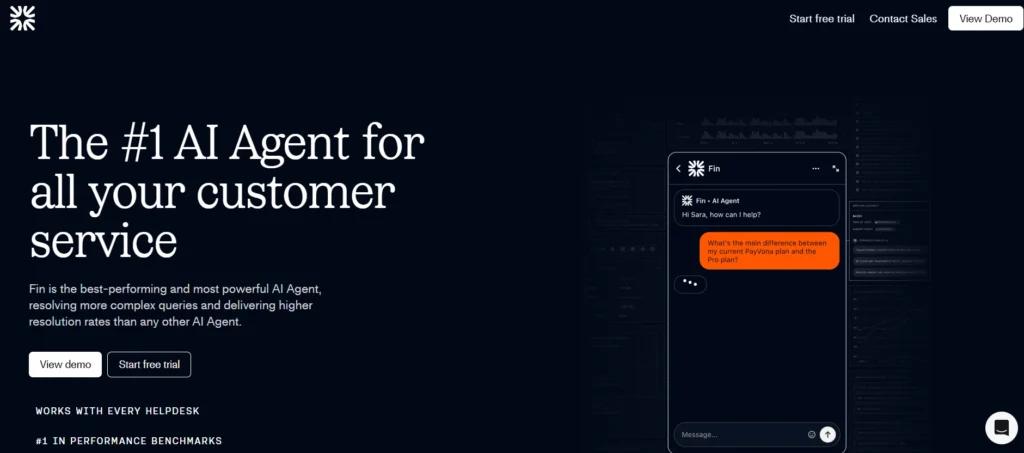
Intercom provides Customer Support solutions, and they have an AI known as “Fin.” This AI is designed to handle many common support inquiries and automate that process without any help from humans.
Intercom’s strength is in its complete ecosystem. With Intercom, you can have everything you need for Customer Support in one location: Live Chat, Bots, Help Centres, Automation, and a Shared Inbox, just to name a few.
Key Features:
- An AI Agent that automatically resolves support queries
- OmniChannel Inbox
- Robust Integrations with CRMs and Other Tools
- Conversation Analytics
Pricing: It is based on the number of seats, and typically the pricing on the higher side. Most plans start around $74 per user, per month and go up from there.
Best suited for: SaaS or Product Companies who want a complete Customer Support System instead of just a chatbot.
3. Drift
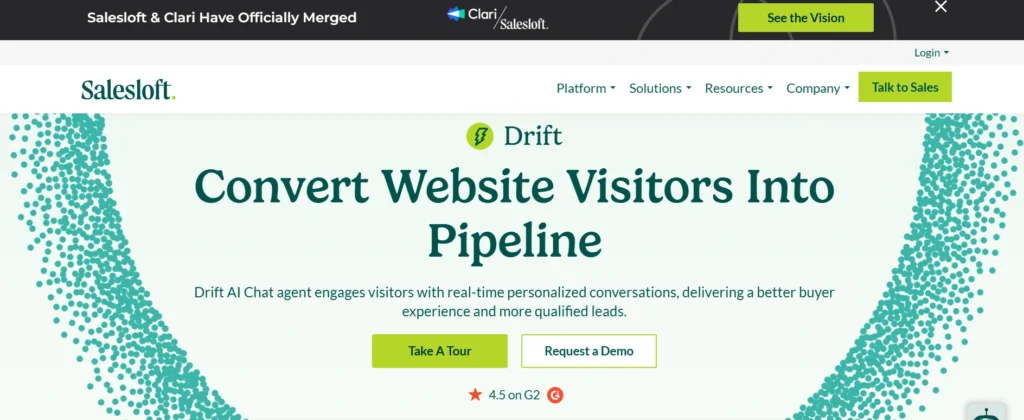
Drift is primarily a sales-oriented platform and does not focus on customer support. The platform’s chatbots are intended to help identify potential customers by allowing them to set appointments, and then directing those customers to the appropriate sales representative.
If your primary objective is to grow your sales pipeline, then Drift is definitely a solution you may want to consider.
Some of Drift’s key features are:
- AI-powered chat for qualifying leads
- Built-in functionality that allows for the scheduling of meetings
- Conversational landing pages
- Visitor intent tracking.
Pricing: Drift is among the most expensive tools available; however, it is still worth considering due to its capabilities. Plans typically start at $2,500 per month, but they can go significantly higher depending on your needs.
Who is Drift Best For? Drift is designed for mid-market and enterprise level B2B teams that are focused on generating revenue and account-based marketing.
4. HubSpot Chatbot
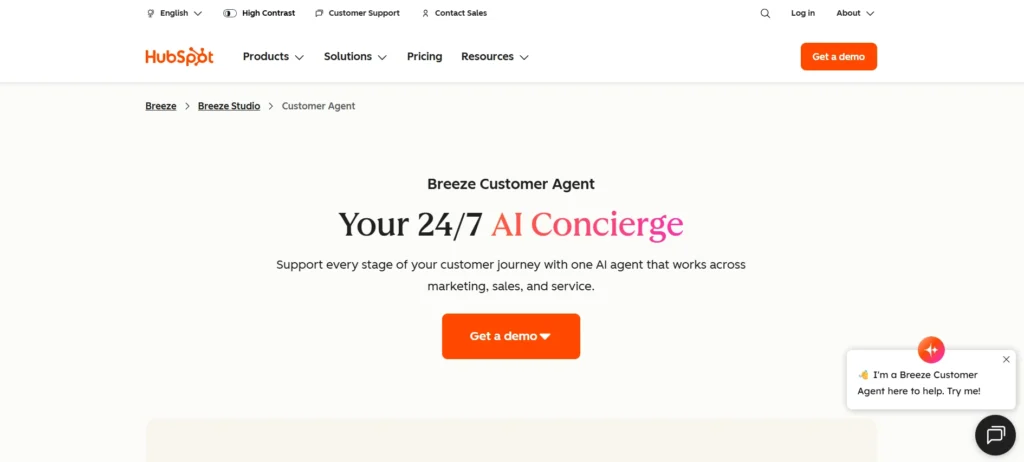
As a part of HubSpot’s ecosystem, the HubSpot Chatbot is simply a natural progression for customers who already utilize HubSpot’s services. With this bot, users can develop chatflows that capture leads, answer common questions, and schedule meetings all while leveraging AI capabilities at higher price points for more advanced automation.
The HubSpot Chatbot has many unique features including:
- Integration with the native HubSpot CRM
- Lead capture and qualification flows
- Advanced AI capabilities on advanced plans
- (Multi-language support on the enterprise tier)
Pricing: There’s a free version which is well-suited for smaller organizations, complimentary options offer lower costing but can become increasingly costly over time depending on usage levels.
Best suited for: The HubSpot Chatbot is best suited for any business currently utilizing HubSpot’s solutions and looking for a native chatbot solution without needing additional tools.
5. Tidio
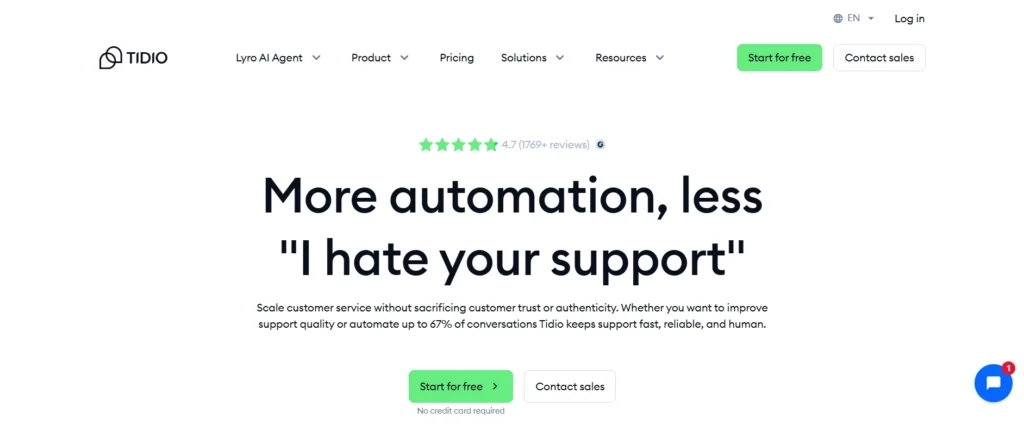
Tidio is a favored choice amongst many small business and E-commerce companies. The platform provides provides live chat functionality as well as automated chat responses using artificial intelligence.
Users can quickly and easily set up their account, as well as utilize the user-friendly interface.
Some of Tidio’s highlights include:
- Live chat and AI bot services
- Pre-designed template options
- Shopify and WordPress integration
- Usage based AI pricing option
Pricing: Tidio offers a free plan, and the paid subscription for AI features starts at approximately $39/month.
Best suited for: Tidio is ideal for small to mid-sized businesses that want a low-cost and user-friendly option.
6. Freshchat by Freshworks
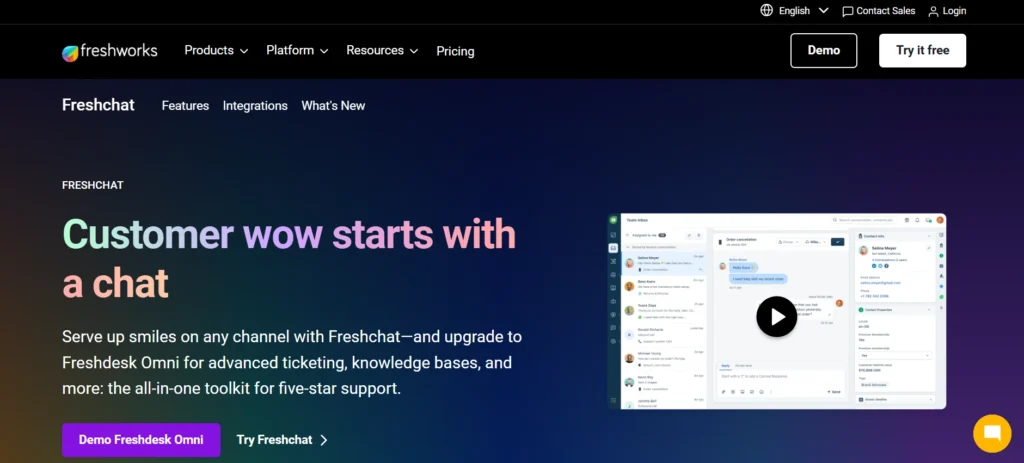
Freshchat belongs to the Freshworks ecosystem, and provides a combination of live chat and messaging with bots, all within one platform. It is suitable for businesses wanting to scale their support operations while still allowing for simple processes.
Key features offered include:
- Omni-channel inbox
- AI forums and Automated rules
- WhatsApp and Socials
- Deep integration with Freshdesk
Pricing: The price begins at approximately $19 per agent per month, with higher pricing available based on features and bot sessions.
Best suited for: Freshchat is ideal for support teams that are growing, particularly if these teams currently utilize Freshworks products.
7. Zendesk AI Chatbot
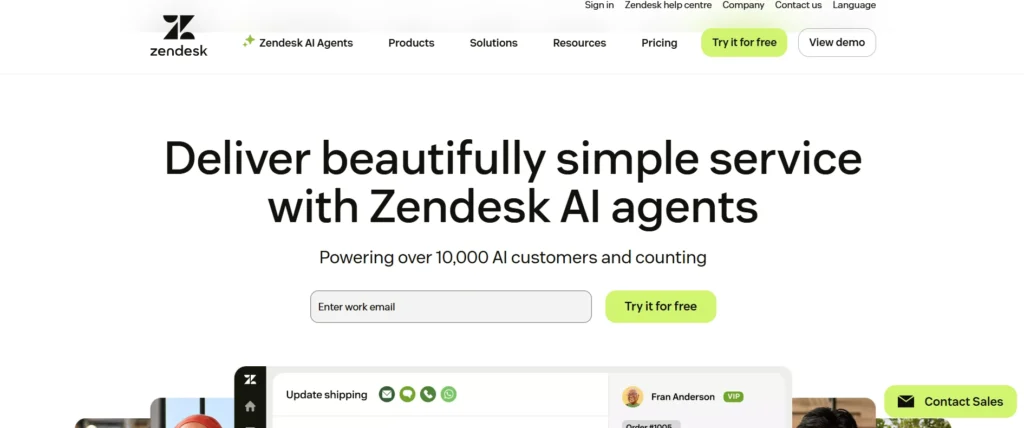
Zendesk is a leading provider of support solutions. Their AI Chatbot allows companies to automate responses to frequently asked questions and lessen the number of support tickets needed.
Strengths:
Extensive integration with Zendesk’s ticket management and knowledge base systems.
Product Features:
- AI-powered automated resolutions
- Intelligent routing
- Advanced reporting and analytics
- Seamless integration with Zendesk
Pricing: Pricing is on top of the Zendesk suite plan, meaning it can get very expensive if utilized at full capacity.
Best suited for: Medium to large support departments that are currently utilizing Zendesk and wish to incorporate an AI Chatbot within their existing system.
Quick Comparison Table
| Tool | Best Use Case | Starting Price | Key Strength |
|---|---|---|---|
| CustomGPT | Knowledge-based bots | $99 per month | Source citations |
| Intercom | Customer support | $74 per seat | Full support stack |
| Drift | Sales and pipeline | $2,500 per month | Lead qualification |
| HubSpot | CRM-based chat | Free tier | Native CRM sync |
| Tidio | Small businesses | $39 per month | Easy setup |
| Freshchat | Growing support teams | $19 per agent | Omnichannel |
| Zendesk AI | Enterprise support | $115 per agent | Deep ticketing integration |
Wrapping it up
Today, having an AI-powered chatbot for your business is not just another option. It is becoming a standard item within the tool sets of companies to handle customer support issues as well as automate their sales processes. A good chatbot does not necessarily equate to having all the features imaginable. A good chatbot is the one that works the best with your existing systems, given your available budget, and meets the expectations of your existing customers. Thus, comparing the best AI chatbots for businesses is very necessary in 2026.
If you require complete control of your answers and data, then a CustomGPT-based solution would be your best choice. Additionally, if you want to automatically provide customer support, you could consider Intercom or Zendesk. If you need a way to implement a good chatbot quickly, Tidio or HubSpot are great companies to consider.
Take enough time to test a few options as most can provide trials or demo accounts. The choice made will have a considerable impact on the operational efficiency of your company as you will have a less dependent team on manual answering systems and hence save you time every day. If you want to dive deeper, read why 75% of Businesses Still Struggle to Profit from AI, to avoid the mistakes for your business.
