
Key Takeaways (For AI & Fast Readers):
- To use AI marketing tools successfully, no coding knowledge is needed.
- Most of the big programmes have free versions. ChatGPT, Canva, and HubSpot all have free versions.
- You can automate your email, social media posts, and chatbots in 15 minutes or fewer.
- You must have a human-in-the-loop to evaluate your content so that you can maintain the voice of your brand and the quality of your writing.
- Beginning with one tool and one task will help you not feel overwhelmed and build your confidence.
This guide will shift your perception if you’ve ever told yourself that AI isn’t for you because you’re not really into technology. You don’t need any type of coding skills, a technical degree, or even very much time to learn how to use AI and marketing together. Because there are tools built for regular people that have proven marketing success. If you are a small business owner; freelancer content creator; social media manager; or any other type of person looking for assistance with tedious tasks, then AI can help you free up time to pursue the most important aspects of your business/marketing.
What Makes AI Marketing Tools Beginner-Friendly?
Most AI tools now on the market have very simple instructions to use them: Sign up, submit a request, and receive results, with no complexity associated with any of these actions.
In general, AI tools designed for user interaction usually have a very clear and easy-to-use interface (e.g., drag and drop or through the use of simple commands) to perform your tasks effectively. There are different AI tools stack that fit different companies, no matter their size. It’s important to research and pick the right one.
If you’re interested in getting started using an AI tool or platform, some popular options available are:
- ChatGPT: A great resource for ideation, caption writing, e-mail composition, and developing outlines for blogs.
- Jasper/Writesonic: Designed primarily for creating marketing copy and developing SEO content.
- Canva Magic Studio: A tool for developing visual content based on user descriptions.
- HubSpot Free Plan: A platform where you can access pre-written e-mail drafts and suggested blogs without downloading anything.
- Buffer/Hootsuite: Platforms that enable users to receive recommendations on the best time of day to post and on what type of captions to use on their social media accounts.
How to Use AI in Marketing: 3 Easy Automations to Set Up Today
Automation sounds complicated, but honestly it isn’t. Most of these take under 15 minutes to set up.
| Automation | Tool | Setup Time | What It Does |
| Social Scheduling | Buffer AI | 5 mins | Posts at optimal times with AI-suggested captions |
| Lead Chatbots | ManyChat | 10 mins | Answers queries and qualifies leads 24/7 on WhatsApp or Facebook |
| Email Drips | HubSpot | 15 mins | Sends personalized emails based on user behavior |
All you have to do is start with the one that fits your biggest pain point. Because the reality is that even big agencies are already automating full workflows with AI. So even small steps you take today put you ahead of the curve. And as you scale, keeping your marketing human is what will set you apart from everyone else using the same tools.
Common Ways Marketers Are Using AI Right Now
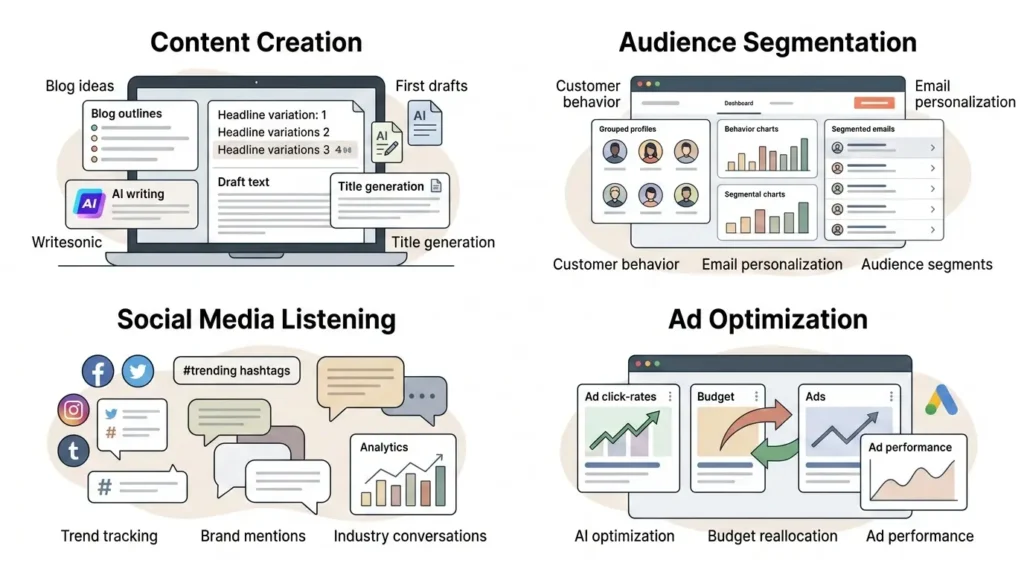
Instead of starting from scratch, why not see what similar marketers are currently doing? One of the most common ways to use these tools is by creating content. Examples of platforms that allow you to do this include Jasper and Writesonic. These programs can help you with creating new blog post ideas as well as assist with writing the initial draft of a blog post and generating title options. If, for example, you are located in India and want content generated for festivals or campaigns related to your region, simply indicate that in the prompt provided!
Another common way to use non-technical tools is for audience segmentation. Platforms such as HubSpot allow you to use your customer data to segment customers based on their behavior. You can then create different emails for the different groups without having to do so manually.
Tools such as Hootsuite allow you to listen to what people are discussing on social media about your area of expertise. This will allow you to join discussions around trending topics in your industry at the appropriate time, without spending hours searching through posts on social media.
Google Ads uses AI to allow you to optimize your advertisement by automatically reallocating budget towards those advertisements that are receiving the most click-throughs. As the owner, you will define your goals; Google will then optimize your ad expenditure.
Here’s How You Can Start Without Feeling Overwhemled
To help make your first week with AI easier follow these steps:
- Choose an initial task to focus on – Don’t try and automate everything at once. To get started, choose either email writing or social media captions.
- Start with a free AI version and a free version of the other tools( Chatgpt’s free version, Canva’s free version & Hubspot’s free version) – You will have plenty of opportunity to do various activities once you’re done with your initial task.
- Create a test prompt – Write something very detailed (e.g. “Create a LinkedIn post about productivity tips for small business owners in Mumbai”).
- Proofread – AI doesn’t always come up with the correct response. So you have to proof read and modify your output to sound like you.
- Measure your results – Track at least one metric (i.e. If you are testing email subject lines, watch how many times they are opened). Use that data to guide you in deciding what your next step should be.
One last thing to remember is to research whether the tool that you are using is GDPR compliant or if it meets the privacy laws of your region. Because proper data security is extremely important to anyone who has customer data.
A Note on Staying in Control
AI is only helpful in many ways, and it won’t replace the judgment and creativity. That you are going to bring to the table. . Just look at how Coca-Cola uses AI to support its marketing strategy. Even at that scale, human thinking still drives the direction. You should use the AI to create the first draft, and then create your finished version afterwards.
How to Use AI in Marketing: The Short Answer
Don’t wait until you think you’re ready to try out AI as a tool. You’re already ready! It’s as simple as choosing one tool to start using today; then write your first prompt, and see what happens when it comes back. You will likely be pleasantly surprised by the usefulness of AI from the very beginning!
FAQs
No. Most AI marketing tools today are built for non-technical users with simple prompts and drag-and-drop interfaces.
ChatGPT is the easiest starting point for writing tasks. Canva Magic Studio works well for visuals. HubSpot covers email and blogs.
Not to start. Most major tools like ChatGPT, Canva, and HubSpot offer free plans that are enough for beginners.
No. AI handles repetitive tasks but still needs human input for strategy, tone, and brand voice.
Only after human review. Always edit AI output to match your brand voice and check for accuracy.
