
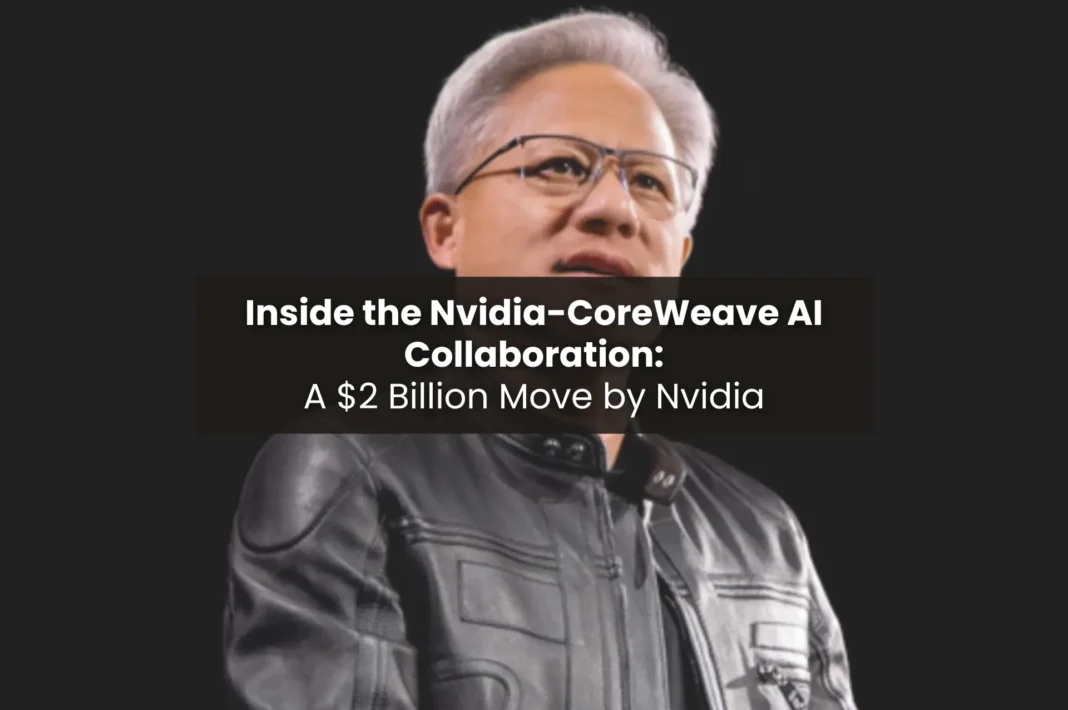
Nvidia just dropped another $2 billion into CoreWeave.
If you’ve been paying attention to the chip and AI space, you’ll know that the news about Nvidia investing $2Billion in CoreWeave hasn’t come out of nowhere. Nvidia and Coreweave have been circling each other for sometime now, but what’s new is the scale of what they’re trying to build together.
This is not just some Strategic Partnership that is released in the Press Releases. The scale of this ‘AI collaboration’ is huge, even for 2026 standards. Talk about building full blown AI factories that are supposedly going to be so huge, that they are going to hit 5 Gigawatts of power by 2030, according to AI Business.
Let’s put 5 Gigawatts of power into perspective here: This amount of power is enough to power, if not thousands, then millions of homes. And all this power is going to keep the LLM’s, Gen. Video generation systems and whatever might come after those.
“AI is entering its next frontier and driving the largest infrastructure build-out in human history,” Jensen Huang, President and CEO of Nvidia said.
That alone is a big indicator of where AI collaboration is heading.
Why now, though?
Many people have been asking the question: “Why this AI Collaboration didn’t happen in 2025?”
Because a year ago, this deal would’ve been a bit difficult to justify. 2025 was the year everyone was panicking about ‘AI Bubble’. Investors felt uncomfortable pouring billions on chips, data centers and model training. To them, this spend felt reckless because no one could explain how the money was supposed to circle back.
So Nvidia took their time.
In 2026, the narrative from “Are we spending too much” has quietly shifted to “Who actually has the power to build?” The constraints now are Land, power, availability, grid access and cooling capacity, not Chips.
That’s why Nvidia is moving fast now. Because securing high density power and the real estate to support it, is the real catch. That’s why, if CoreWeave doesn’t secure the expansion today, the risk of Nvidia’s next gen Rubin systems not scaling at all, is going to be real. And in this time of AI, that’s game over even before it starts.
What’s the big deal with this AI Collaboration?
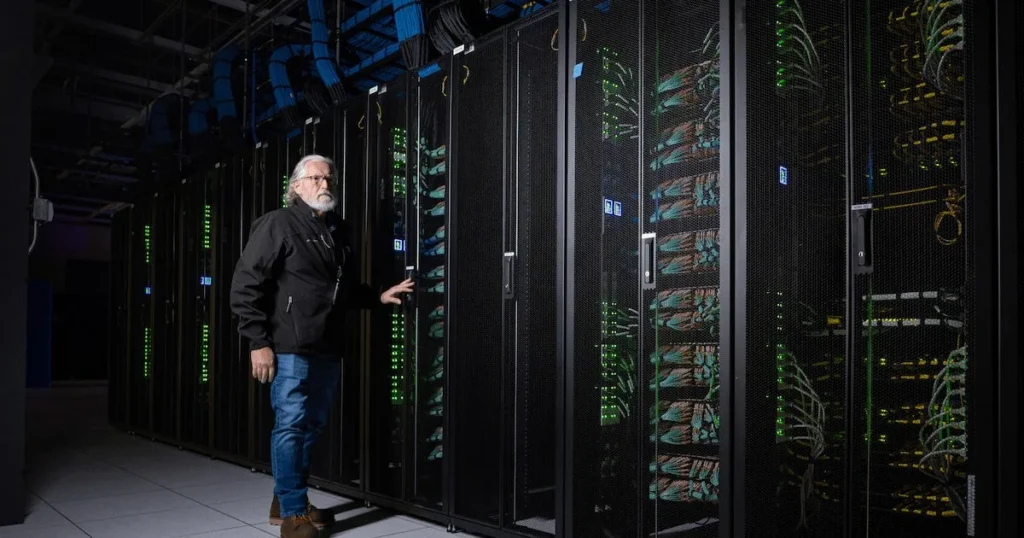
Nvidia isn’t just selling GPUs anymore, but they’re also putting capital behind the places where those GPUs will live and scale while continuously being fed with power, cooling and networking. CoreWeave, on the other hand, is basically building a blueprint for the future of data centers. Which simply means that instead of just sticking GPUs in a rack; they’re building integrated AI Factories.
“This expanded collaboration underscores the strength of demand we are seeing across our customer base and the broader market signals as AI systems move into large-scale production,” said Michael Intrator, chief executive of CoreWeave.
What’s clear is that AI collaboration in 2026 looks less like software partnerships and more like industrial planning with mentions of Power grids, acquiring land and installing cooling systems. These are long term bets that don’t usually pay off overnight.
This is a huge signal that Jensen Huang, President and CEO of Nvidia, doesn’t just want to be the guy who sells the pickaxes, but,he wants to own the mine, the map and the road leading to it.
Why CoreWeave? (The “Neocloud” Factor)
It is natural to think that Nvidia would just want to lean on the big guys like Amazon, Google or Microsoft. And yes, they do. But these big guys are quietly building their own ‘chips’ as well, which makes them competitors more than partners.
CoreWeave doesn’t have legacy systems or old software to worry about. They are what we call “Neocloud”, because everything they have built is for AI workloads.
So when Nvidia decides to put serious money into this AI collaboration, Nvidia has guaranteed that there’s a massive, specialised cloud provider that’s aligned with Nvidia’s roadmap from day one, especially around Nvidia’s Rubin architecture.
Who actually holds the leverage?
On paper, the one designing the chips and defining the architecture holds the most leverage. In this chase, that would be Nvidia. But in reality, the economics of this is much more fascinating.
Despite investing in CoreWeave, Nvidia still needs physical places to deploy its advanced systems. They require setups that can handle massive power loads, hardware that’s aligned tightly with the software that is running on top of it and faster chip to chip communication. The big guys are busy building their own chips, and that’s why relying on them for this would be a bad move. Because as stated earlier, this makes them more of a competitor than a partner.
On the contrary, CoreWeave’s focus is straight here. They are almost entirely built around Nvidia’s roadmap which means there’s no competing silicon and no divided incentives. CoreWeave’s infrastructure exists to run Nvidia’s systems as efficiently as possible.
And that gives CoreWeave a leverage of its own.
What you can see here is the mutual dependency, and this is exactly why this collaboration works, and is also expensive. Nvidia brings demand, technology and credibility, whereas CoreWeave brings capacity, specialization and speed. Neither side fully wins without the other.
The Tech: It’s all about the Rubin Platform
What this deal is really pushing forwards is ‘Rubin’ into actual machines that are running non stop. These AI factories aren’t just about stacking raw power, but about the ‘interconnect’, meaning, how these chips communicate with each other.
Because if the chips are powerful, but the communication is slow between them, then the AI is going to be slow. Which simply means that the models are going to wait, the training is going to stall and the money is going to burn.
The new Nvidia setup – Vera CPU’s and Rubin GPU’s are designed to work together in a way that the Traditional data centers weren’t built for.
So CoreWeave in this scenario is where the hardware gets perfected first, before it becomes the default elsewhere.
5 Gigawatts is…..a lot of electricity
Let’s be real for a second. The energy demand is the elephant in the room. 5 gigawatts by 2030 is an insane target. It’s one thing to have the chips; it’s another thing to have the power grid to back it up.
This partnership is as much about real estate and energy contracts as it is about silicon. CoreWeave has been snapping up data center space like crazy, and with Nvidia’s $2B, they’re basically fast-tracking construction that would normally take a decade.
Why Costs and Margins Matter More Than Chips Now
Rising training costs, inference expenses, and power prices are putting pressure on AI margins, according to Investing.com. Nothing is getting cheaper, thus, owning or even influencing the infrastructure can help smoothen those margins over time.
So by investing directly into CoreWeave, Nvidia becomes their supporting partner as well as reducing the downstream risk.
- More predictable deployment costs
- Better utilization of high-end GPUs
- Fewer pricing shocks during peak demand
- Less reliance on hyperscaler markups
For CoreWeave, the upside is equally clear. The Nvidia backed expansion lowers the capital risk and strengthens the long term pricing power with customers, who need a guaranteed access to the advanced compute.
This is how they are going to control the costs through collaboration.
But not in the short term, because the AI infrastructure is still expensive, but, over the lifecycle of the platform. So from an economic standpoint, this move is defensive as much as it is strategic.
image credits: screenshot taken from YahooFinance
Is this good for the industry?
That’s for you to decide. On one hand, this AI collaboration is pushing the boundaries of what’s possible. We get faster models, better research, and more intelligence (whatever that means this week).
On the other hand, it’s a very tight circle. If Nvidia owns the chips and a huge chunk of the cloud they run on, does that leave enough room for the little guys? Or are we just watching the new version of Big Tech consolidate power before our eyes?
What to watch for next:
- The Rubin Rollout: Keep an eye on when the first “Rubin-powered” clusters actually go live in 2026.
- Power Constraints: Watch for news about CoreWeave partnering with energy companies or even small modular reactor (SMR) startups. They’re gonna need the juice.
- Competitor Moves: See if AWS or Azure tries to block these “AI Factories” or if they double down on their own internal chip designs to keep up.
Bottom line? The $2 billion isn’t just a check. It’s a foundation. Nvidia and CoreWeave are betting that the future isn’t just cloud computing, it’s factory computing. And honestly? They’re probably right.
