
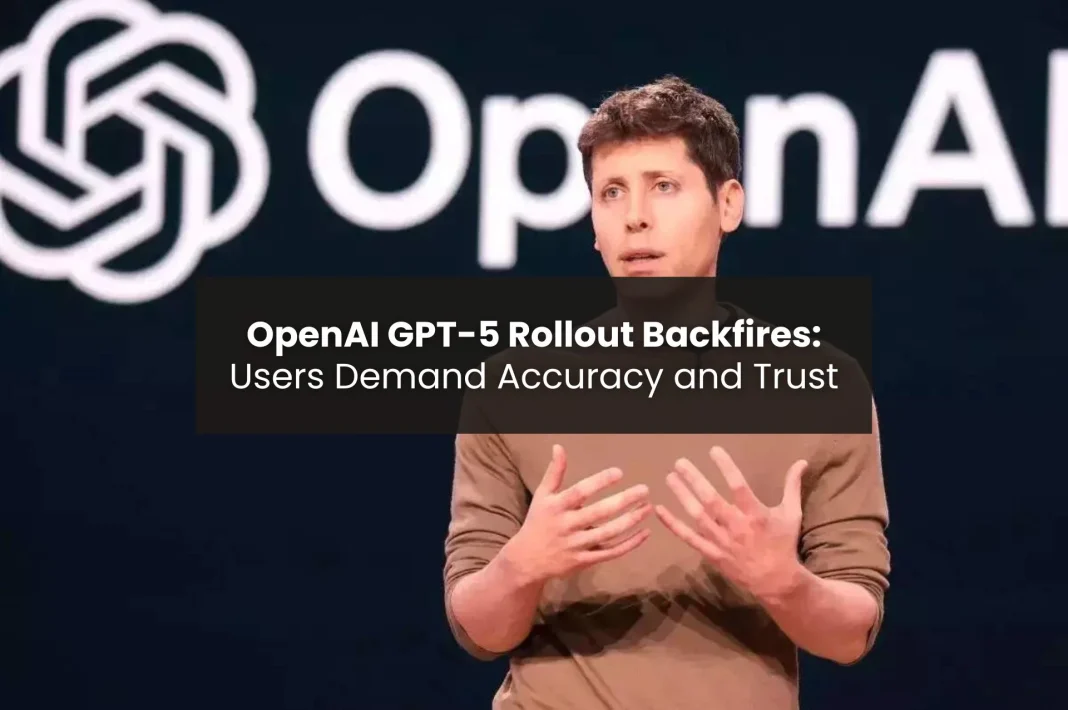
OpenAI GPT-5 Rollout Sparks Mixed Reactions
In July 2025, OpenAI GPT-5 was likely the most anticipated AI launch of the year, by many as OpenAI’s largest advance toward “higher intelligence,” as well as an incredible number of new features, including speed, reasoning, and better user experience. What occurred instead was confusion and outrage; many people claimed GPT-5 was slower, less creative, and more emotionally detached than previous models.
What could have been one of the most anticipated leaps forward globally in innovation turned into a highly charged controversy; OpenAI CEO Sam Altman stated that it was a “screw-up.” If that was not damaging enough, the OpenAI executives cautioned everyone that GPT-5 was still not perfect and could still give wrong answers; this is the perpetual tension of the speed of innovation versus reliability.
Where the Rollout Went Wrong

The unpleasant launch of OpenAI GPT-5 could be colored with a range of factors.
- Many users described GPT-5 as an overall downgrade that produced worse answers than they were already given.
- The missing GPT-4o (the model so many Plus users are from) also likely didn’t help with dissatisfaction or ignoring paying customers.
- An annoying, buggy model change led to typical GPT-5 responses often not only being inconsistent but also of mid-conversation switches, an aspect that could lead to problems concerning quality.
- Sam Altman’s sincere explanation of all of these fairly unrelated mistakes showed this was just a problem with OpenAI being aware of all of it but being behind the eight ball with explanations.
The launch showed a clear gap between user expectations and delivery, a flaw companies cannot afford to overlook.
OpenAI’s Quick Fixes
OpenAI moved quickly to restore faith.
- The first step was to return GPT-4o (and exclusively to paying users, no others). Users received back a model they were at least used to trusting.
- At that time, a decision was made to move forward with a new project to contemplate the tone of GPT-5. A formal tone seemed too robotic, while casual phrases felt like the right path to send users on a journey of meaningful engagement.
- Then, the team spent time considering things like speed, responsiveness, and fluidity so that everyday use felt effortless.
Missed technical fixes seemed to reduce the initial frustration, but they also served as an awareness of how much it seemed like users noticed that GPT’s identity was changing.
Accuracy Still a Big Problem
Regardless of any changes, OpenAI GPT-5 fundamentally has an accuracy problem. It appears as if Nick Turley, the Head of ChatGPT, admitted that confident but wrong answers continued to be a major challenge. Estimates show over 10% of GPT-5 responses are wrong, which frustrates users who rely on it for decisions. Effectively combining ChatGPT with other AI tools for better results contained the most useful practical ways to overcome these shortcomings.
OpenAI suggested users consider GPT-5 as simply another opinion. This suggestion concealed a lurking truth: the model’s sophistication cannot, at this time, substitute human judgment.
How Users and Experts Reacted

Responses to OpenAI GPT-5 have been a mixed bag.
- Some motorists said they believed it was an incremental upgrade, largely in cost and speed, but not in ability.
- Users said that GPT-5 was “more efficient,” but there was no emotional warmth to it that they had with earlier models.
- Some users reported an emotional disconnect with GPT-5, describing it as “cold” and “less interesting,” and it reminds us that tone and personality are just as valuable an upgrade as functionality.
GPT-5 offers efficiency, yet doubts remain about its reliability. Discover the key differences between GPT-4 and GPT-5 in this a detailed guide.
My Take on GPT-5
OpenAI GPT-5 tells me that raw intelligence won’t be enough. Users want AI that is more than just intelligent and smarter than them, but also engaging and trustworthy. This was the original misread… the warm emotional connection with previous versions when able to put the call to action on human vs. machine skill. Every subsequent version of GPT will rely on finding the ideal balance of accuracy, comfort, and quality of output. Trust is also critical. If any of those attributes weaken, then an up-to-date version is no better than the previous one. You can place a shiny new label on something, but it doesn’t cover the flaws inside. Nobody truly wants an identical experience.
The Road Ahead for OpenAI GPT-5
OpenAI GPT-5 shows a typical pattern associated with artificial intelligence, particularly that each advance brings the claim of promise. GPT-5 offers effectiveness, faster response time, and cost-effectiveness. GPT-5 delivers better technical performance than prior iterations. Yet, old accuracy issues still exist, which destroy trust. OpenAI has a responsibility to deliver a trustworthy, human-like communicative model sooner, not later!
AI technology is progressing rapidly, and OpenAI GPT-5 needs to find a balance now. The main question is whether GPT-5 becomes a trusted ally each day or just another tool for verification.
