
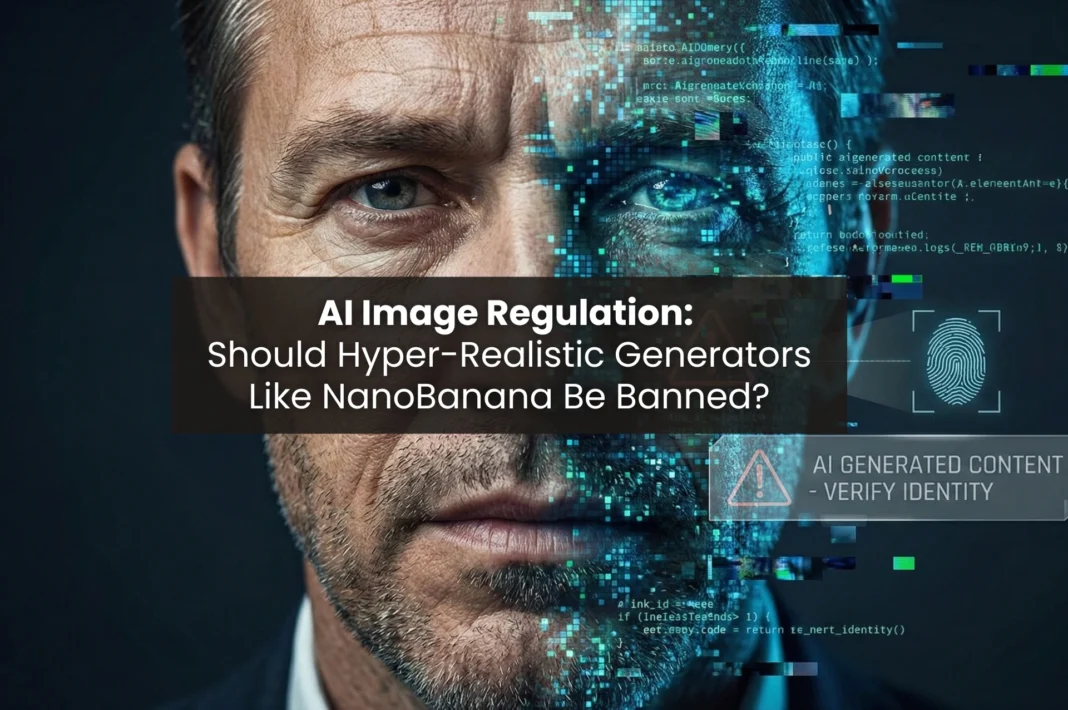
In the last few months I think we all would have come across at least one hyper realistic image that looks so real that you can’t even make out that it is AI generated. Be it the saree trend, pictures with your younger self, Nano Banana has made it all possible. While it’s commendable what technology can do now, it’s also scary to what extends it can be abused. This concern has been addressed and seen in the real case studies that expose the hidden risks behind the internet’s favourite image tool.
This technology brings up a question of principal: should we maintain control over these instruments or grant them absolute freedom? At what point do we set the limit?
Controlling AI is a very hot topic of discussion at the moment since its capabilities are well-known to all. In a few seconds only, AI generators are able to make up the faces of celebrities, impersonate real people, and produce 2K resolution images. Gone are the days of tedious, skilled editing, now all you need is a good prompt.
Why Some People Demand Highly Regulated AI Images
First of all, people who oppose such technologies are those who worry about the infringement of their privacy. These kinds of models allow any person to create a photorealistic image of a different person without even asking for the permission. It may happen that someone might use your image in the instances that you would never agree to. The thing that defines your identity is no longer in your control.
Deepfake porn videos, without a doubt, are the kinds of videos that are suffering the most. While the authorities are not turning a blind eye to the situation, they are rather taking actions to address it. In May 2025, US Congress has passed the TAKE IT DOWN Act that makes it a federal crime to publish non-consensual intimate AI-generated imagery without consent. The UK is prosecuting those who produce deepfakes without the consent of the parties involved.
Why Complete Ban Won’t Work
People don’t really see tightly controlling and regulating AI models as solving the problem. There are a number of good and honest uses. For instance, Fashion brands visualize products, students use the model for visual content in their projects and ppts and there’s just so much more. If there had been a ban on the technology, none of these would be possible.
What Governments Have Been Doing
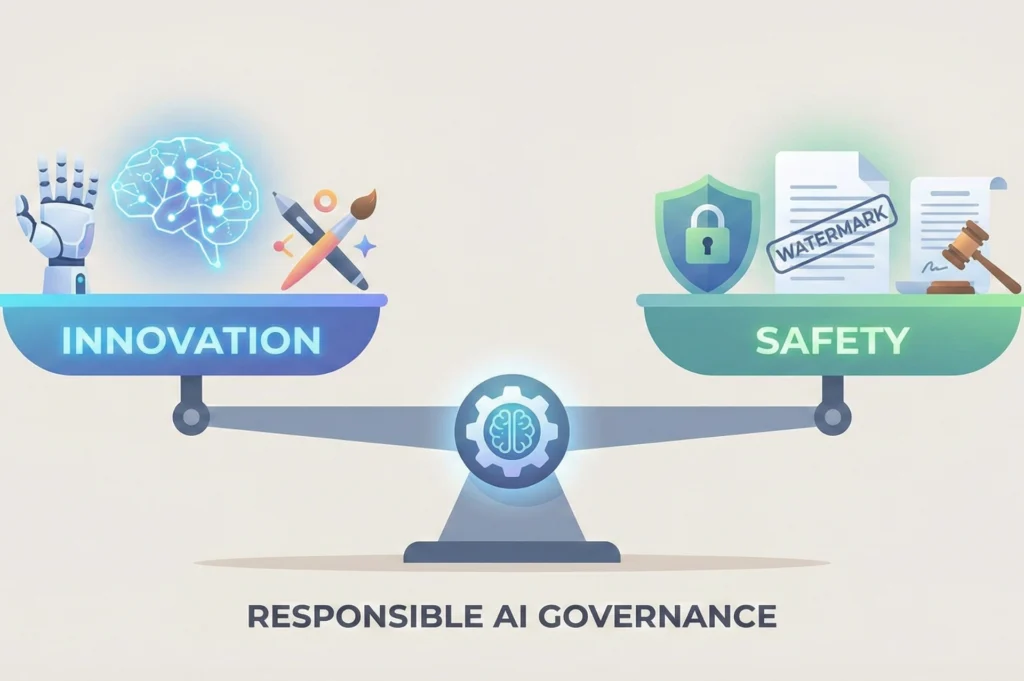
Many officials decided to handle AI-made pictures with looser and more relaxed rules. Something in the middle, neither too strict nor too relaxed. This is to ensure there is a balance between innovation and safety.
- Labelling requirements:
India thinks by the end 2025, all AI-made stuff must show a visible tag. They should be taking up no less than 10% of the space. Meanwhile, the EU insists on hidden digital markers built right into synthetic media.
- Preventing damages:
Yet they’re zeroing in on how tech can backfire like when doctored explicit clips spread lies about voting scams. So it’s not really the tool causing trouble. Meanwhile, nations such as Denmark, plus Germany, alongside Britain, are leaning the same way.
- Platform Responsibility:
Social networks must quickly take down harmful posts. While keeping their monitoring tools running. So now, the priority should shift from managing algorithms to handling what users post.
Solutions That Do Actually Make a Difference
Several safeguards are being put in place, as they should be, or else people will continue to take undue advantage of the technology. Safeguard like:
- Watermarking: Google places visible watermarks and has put daily limits on photos made by NanoBanana Pro. Their SynthID technology can identify the source of the content with 95% accuracy. Essentially, what this means is that the content is AI. The same can be seen by everyone who views the image.
- Responsible licenses: Organizations can use commercial accounts only if they meet a specific criteria, because now licensing agreements restrict their use.
- Detection tools: Companies are developing AI-powered fraud detection and biometric verification systems.
The Safety Road to be Taken Ahead
Regulation of AI is as important as setting traffic rules before cars filled the roads. We as users have to be collectively responsible. At doing the right thing and not misuse the technological advancement that we’ve been lucky to witness. At the same time I do agree that there should be certain regulatory restrictions. This is to ensure there’s no undue advantage being taken. We need targeted governance and not total bans. On one hand there’s innovation. And on the other there is safety and both need to be in balance at all times. The bottom line is that as these tools keep getting better, we need to keep adjusting the rules.
