
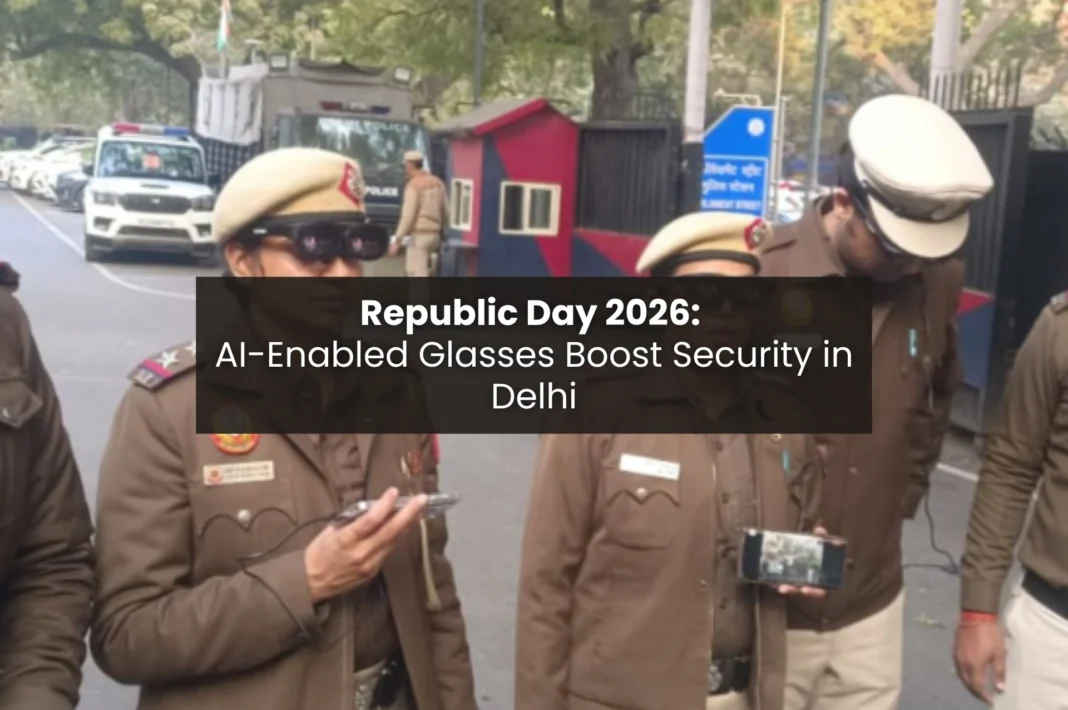
The 77th Year Anniversary of the Republic Day celebrations in Delhi will see the use of technology as a method to promote the safety of the general public. This use of technology is also indicative of how technology will be integrated as a part of Delhi’s security plan for future major events. All through the development of AI (artificial intelligence) assisted glasses for Law Enforcement Officers while on duty.
By providing an additional level of safety and increasing the ability of Law Enforcement Officers to perform their duties in a quicker and more efficient manner, the development of AI enabled glasses for Law Enforcement Officers will have a dramatic impact on the safety of Delhi’s large public celebrations as will having a substantial population of thousands of attendees during the parade and surrounding events. The use of AI by Law Enforcement Officers while attending to the safety of large crowds and large gatherings of citizens is now quickly becoming a way of doing business for these officers.
How are AI-enabled glasses being used for Republic Day security in Delhi?
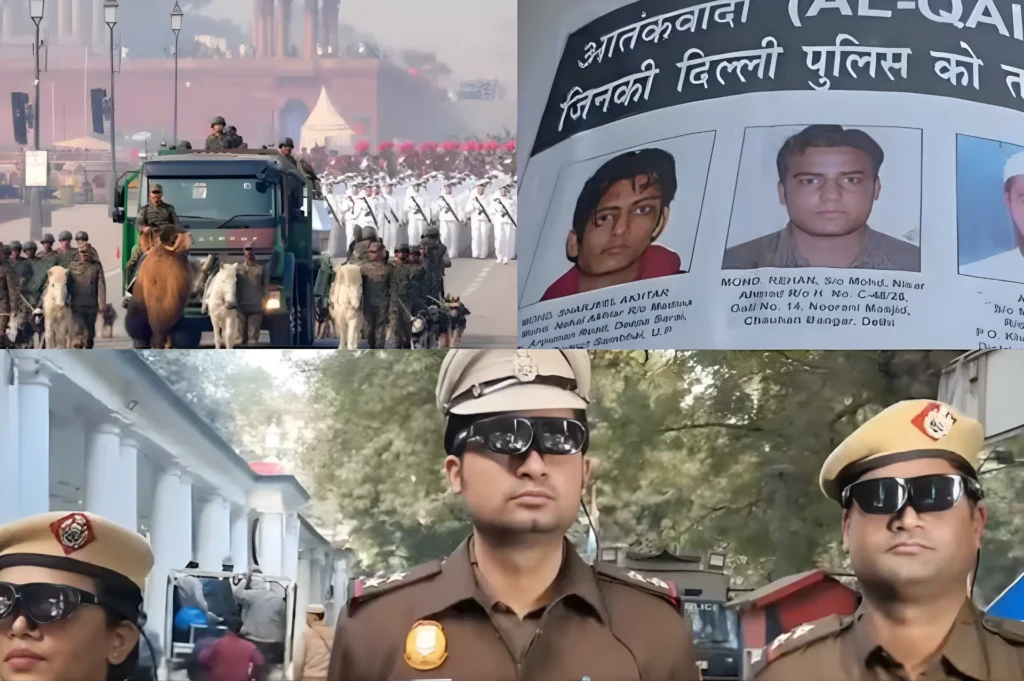
During this year’s Republic Day celebrations, technology will play an important role in the security of New Delhi. AI-enabled glasses will be placed at important sites throughout the city, allowing police officers to utilize facial recognition and thermal imaging technology. AjnaLens, an Indian startup that specializes in developing cutting-edge AI technology, created these smart glasses.
For the first time, the Delhi Police have included the photo of a terrorist, Mohammed Rehan, wanted for his association with Al-Qaeda in the Indian Subcontinent (AQIS), in their Republic Day alert posters. Police believe Rehan is from Delhi, and his photo has now been uploaded into the police database to facilitate identifying him in the event that he is seen in a public area.
The Delhi Police report that these AI-enabled glasses can scan and identify people’s faces in just a few seconds by comparing them with the information in their central database. As a result, police officers can identify suspects. Without even having to impede or delay the flow of large groups or crowds through which they may be working.
How do AI-enabled glasses work for police officers on duty?
The AI based specs link with an officer’s mobile device, which has access to all criminal databases and records of wanted persons and suspects.
Additional Commissioner of Police Devesh Kumar Mahla defined the identification process. Upon viewing an individual, the system generates a box over the individual’s face which has a colour coding system as follows:
- Green box: indicates no criminal record available
- Red box: indicates that a comparison exists on police records
The officer can check the mobile device for additional information and take appropriate action as necessary. The overall design of the system replaces the time-consuming manual search method and will allow for better flow of traffic in areas with large volumes of people, reported NDTV.
The system can also process images of individuals who have altered their appearance. According to authorities, images taken from the past, even several decades ago, will still produce a valid and current match.
What role does thermal imaging play in Republic Day security?
Thermal imaging technology is an additional feature of the AI glasses that allows law enforcement officers to identify hidden weapons or other suspicious devices that would otherwise be invisible to the naked eye.
With thermal imaging, officers can have an additional layer of protection when searching crowded locations using traditional search methods. Police departments report that thermal imaging also assists them in recognizing possible threats earlier. Which allows them to intervene before circumstances turn dangerous.
Thermal imaging technology will also be on patrol vehicles. As a result, officers with mobile patrol teams can identify suspect(s) as they travel and react instantly to system alerts.
How is this year’s Republic Day security different from previous years?
This year’s arrangements rely more heavily on smart technology than ever before.
| Security Measure | Previous Years | 2026 Deployment |
|---|---|---|
| Facial checks | Manual verification | AI-enabled glasses |
| Crowd monitoring | Static CCTV | AI analytics and drones |
| Vehicle patrols | Visual checks | Mobile facial recognition |
| Weapon detection | Physical searches | Thermal imaging |
What should citizens expect during Republic Day checks?
Authorities have affirmed that AI-enabled glasses will provide a level of unobtrusiveness in policing. People will not be stopped unless the system flags a concern. This balances the need for smooth movement versus strict security procedures.
At least 10,000 police officers will be in New Delhi’s District for security. Vehicles and visitors will each be subject to three separate levels of security checks to gain entry into a sensitive area.
Though police have not provided the number and cost of smart glasses used or how many they were able to obtain. They stated that adequate levels of supply have been acquired to support deployment of smart glasses effectively.
Wrapping it up
The emergence of AI-enhanced glasses represents a continuation role for technology-led policing in India. Reflecting a broader trend where AI-powered smart glasses are becoming more capable and practical. Across security, enterprise, and real-world applications, as seen in emerging consumer and professional models. Drones, CCTV technology, and HQ-level support using analytics are being integrated with other forms of wearable AI technologies. To support the management of larger events.
This will be the first time that Delhi Police will be implementing futuristic wearables in conjunction with security arrangements to protect the Republic Day Celebrations. Sub Inspectors and field personnel will utilize this device throughout this large celebration.
The use of AI-enabled glasses as a tool by Delhi Police for the security of the 77th Republic will exhibit how far the force has been investing in new security technologies. Delhi Police will be also conduct point-of-entry checks and maintain a more detailed criminal database. This is by using facial recognition and thermal imaging via mobile devices. And this will enable officers to respond and react more rapidly than in previous years.
