
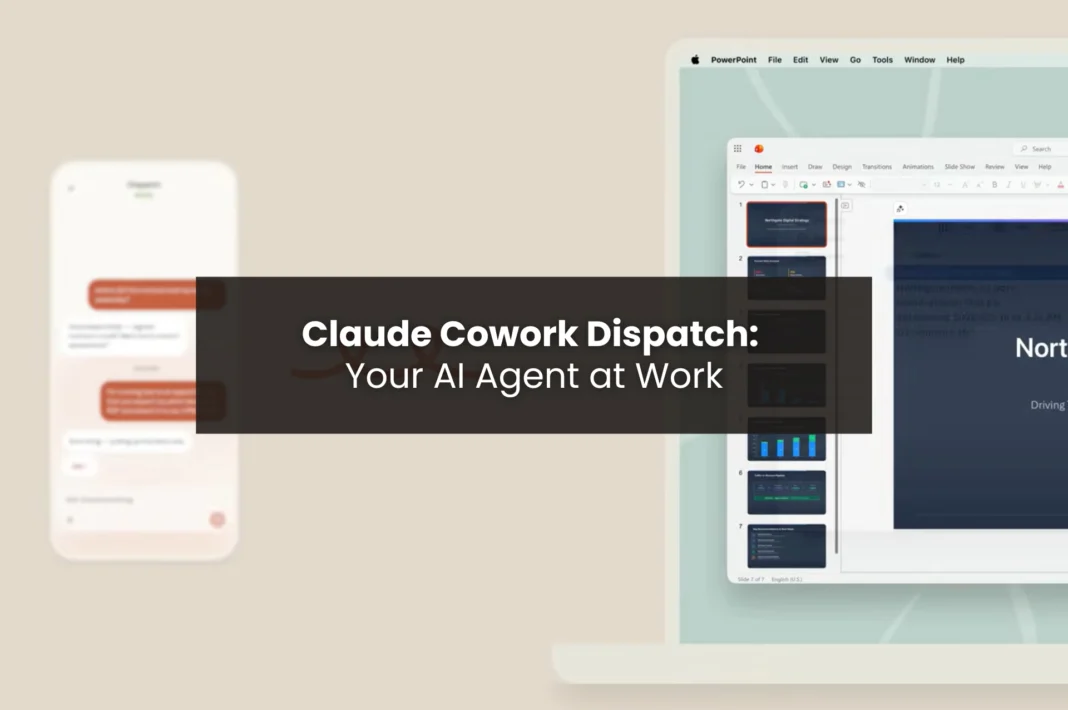
Recently, autonomous AI became much more personal with a new Claude-based assistant dispatch capability called Claude Cowork. With this new feature users can assign tasks to Claude from their cell phone then Claude will execute these tasks on their computer independently, without the user watching over it.
This was developed as a direct response to the OpenClaw craze that hit developer communities in late 2025. For many users this might be the more polished version they have been waiting for. This release follows a string of major updates, which you can explore in our Claude news for March 2026 coverage.
What is OpenClaw and why did it set off this race?
Peter Steinberger from Austria developed an open-source AI bot called OpenClaw, which was released in November 2025 as Clawdbot. OpenClaw became popular very quickly because it allows you to be able to interact with your AI 24/7 directly through various messaging applications. Including iMessage, Slack, Telegram, WhatsApp and Discord. It also provides you with real assistance/ in managing your business by performing tasks for you, such as writing e-mails or organizing files, managing all aspects of your social marketing campaigns, and so on.
As of early March 2026, there were over 247,000 stars and 47,700 forks recorded on GitHub and it is one of the fastest-growing open-source projects of all time.
Despite the rapid growth of this project, it has also brought a high level of risk with regards to security, as there is a possibility that it could access your files/directories on your computer without your permission. In addition, the bot can be quite difficult to use if you are not technically-minded. As a result, large companies with substantial resources generated an opportunity to create something similar in a more secure way.
How does Anthropic’s Claude Dispatch actually work?
As part of their research preview, Anthropic has launched Dispatch to allow you to work collaboratively with Claude in what they call “coworking mode.” You can generate a request on your phone and have Claude perform it through the desktop app.
All you need is for your Claude desktop app to be open on either a Mac or Windows desktop. Then, using your cell phone, you can generate a request, and Claude will complete the request. In this fashion, you can think of Claude as being a virtual assistant that is with you via texting on your smartphone.
With Claude on your phone, you can generate requests to compile a summary report from a local spreadsheet, draft a briefing document from your Slack messages and emails, or create a presentation based on the files located in your Google Drive.
In each instance, Claude will determine the quickest method of obtaining the requested data, either through a connector with Slack, using Chrome to perform Google searches, or using your computer’s screen to launch the app if no direct integration exists. You will receive the completed work back on your desk when you return.
Claude Cowork vs OpenClaw: which one makes more sense for you?
These two tools share a similar vision but take very different approaches.
| Feature | Claude Cowork + Dispatch | OpenClaw |
| Setup complexity | Simple, no terminal needed | Requires technical configuration |
| Security model | Local sandbox, files stay on device | Broader file system access, higher risk |
| Messaging interface | Claude mobile app | WhatsApp, Telegram, Discord, iMessage |
| Target user | General knowledge workers | Developers and power users |
| Cost | $20/month (Pro) or $100+/month (Max) | Free, open-source |
According to Gael Breton (co-founder of Authority Hacker), Cowork Dispatch is essentially “OpenClaw for adults” and does 90 percent of what OpenClaw does. All while being 90 percent more secure than OpenClaw, reported Axios.
While OpenClaw offers the most raw flexibility possible to users, Anthropic offers users the same concept, but in a much more secure format (guardrails) that both businesses and everyday user would feel comfortable using. If you’re deciding which ecosystem fits your workflow best, check out our comparison on Claude vs ChatGPT in 2026 to see how they stack up.
What tasks can Claude actually do on its own?
The scope of Autonomous Actions in Claude Cowork is broader than many users realize.
Claude Cowork can take on complex multi-step tasks and accomplish them autonomously (e.g., organizing files, creating documents, synthesizing research, etc.).
More specifically, Cowork allows users to click on a market question and get back an analysis that contains professional deliverables (Claude will research, do calculations, and produce PowerPoint presentations or Excel spreadsheets to provide analysis and deliverables for the user).
Cowork can also synthesize feedback from call transcripts, Slack, CRM notes, and Linear issues to discover patterns across all platforms and come up with a prioritized list of product ideas. To understand which model handles these complex data synthesis tasks most efficiently, see our Claude AI models comparison guide for a full breakdown.
Claude captures screenshots, sees the UI elements, and can navigate the user’s desktop just like a human would by looking at the screen, reading the text, and visually perceiving the context from the screen in real time using the Computer Use API.
For repetitive tasks, users can tell Claude to get metrics from their analytics dashboards and paste them into the weekly report template every Friday. After the initial setup, Claude does the rest of the work by itself. To get the most out of these autonomous features, you can explore our guide on the best Claude tips and tricks to streamline your workflow further.
What are the real risks users should know about?
The potential downsides of Anthropic’s Dispatch are openly shared in supporting documentation that suggests that the device will be able to perform actions on a user’s behalf, including but not limited to:
- Accessing Read/Moving/Delete files
- Accessing the web
- Accessing other tools/services with Cowork’s permission to use them.
Hands-on tests for recurring/complex tasks have a success rate of 50% because of how many different things can go wrong. When compared to more simply defined/recurrent tasks like searching/verifying for files. Doing these types of searches/verifications have been successful.
The Dispatch is currently in a research preview stage. Anthropic is continuing to test for the agent’s safety to develop it further.
The user must approve each action performed by the Dispatch. The Dispatch will not perform any actions without approval, and the user will receive notifications or updates on their mobile devices for each step the Dispatch performs.
By having both the user and the Dispatch interacting, the Dispatch allows for an intentional interaction with the user and builds confidence that the agent will not perform unintended actions. This right here is a major differentiator from completely autonomous agents.
How can you start using Claude Cowork and Dispatch right now?
To get started, follow these steps:
- Download the Claude Desktop app for either macOS or Windows
- Sign up for either a monthly Pro plan ($20) or an annual Max plan (starting at $100)
- Launch the desktop app and switch to Cowork mode
- Use the QR code in the Dispatch form on your desktop to enroll your phone as a co-creator
- Start sending tasks from your mobile app to your Claude agent
The underlying technology for this feature is referred to as the Model Context Protocol (MCP), which is an open-source standard released by Anthropic in 2024. Which also provides a standard method for the AI model to connect to external data and tools. There is no requirement for network configuration. Through the phone’s use as a remote control for the AI agent that works on your desktop.
Wrapping it up
Anthropic’s Claude has moved past merely answering inquiries and started to independently perform multiple tasks within applications. Like create reports, compile spreadsheets and manage files- all initiated through a user’s smartphone.
The launch of OpenClaw demonstrated the tremendous need for this type of tool. Claude Cowork Dispatch represents Anthropic’s effort to deliver similar capabilities to an expanded audience without a technology or financial hinderance. While still in its infancy, the direction has been established. Autonomous AI work is no longer a vision on the horizon; it is available now.
