
Testing of ads from OpenAI during a ChatGPT session has begun, which represents a significant change.
For the very first time, free U.S. users may encounter sponsored content while utilizing an AI chatbot!
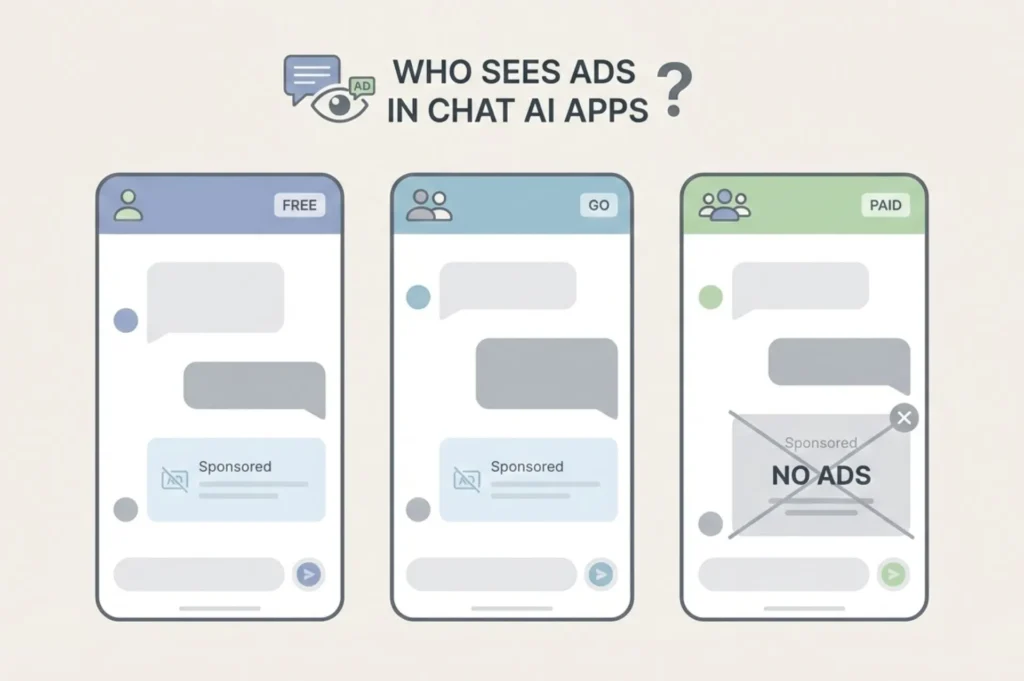
This testing only applies to adult, free and Go plan, (Pay) users will have no advertisement exposure. With this recent move by OpenAI, they are clearly transitioning to an ad-based AI access model that creates real questions around trust issues, price and future functionality of ChatGPT.
With this article I’ll try explaining what is occurring, why it matters and the potential ramifications to you.
What are OpenAI ads and where do they appear in ChatGPT?
Ads displayed on the OpenAI website will appear as “sponsored” at the end of some ChatGPT outputs. Ads do not affect the responses received and will be placed after the response ends.
Here are some key points to keep in mind:
- Ads will match the subject matter that you are discussing.
- Ads will not impact how AI produces responses to user queries.
- Advertisements are clearly going to be labeled as “sponsored.”
- Users less than 18 years old will not receive any advertisements.
- Neither health, mental health nor political advertisements will be produced by this service.
For instance, if a user were to ask for cooking advice, an advertisement may be displayed promoting a grocery business or meal kit service. If a user were to ask for assistance in planning a travel itinerary, an advertisement would be displayed promoting a travel booking service.
How are users reacting to ads in ChatGPT?
Who will see OpenAI Ads and who will not?
Only certain users will see these ads during the test.
| ChatGPT plan | Price | Ads shown |
|---|---|---|
| Free | $0 | Yes |
| Go | $8 per month | Yes |
| Plus | $20 per month | No |
| Pro | $200 per month | No |
| Business, Enterprise, Education | Varies | No |
Go users get higher limits than free users, but ads still apply. Paid tiers stay ad-free for now.
Why is OpenAI introducing ads now?
There is a simple reason; AI costs money. ChatGPT currently has about 700-800 million users per week. The cost of running AI models at this scale is in the billions of dollars. Currently, subscriptions to ChatGPT generate more than $20 billion per year; however, the cost of infrastructure continues to increase.
OpenAI is using ads as a revenue source to cover these costs while still providing free access. Additionally, the company has also committed to spending large amounts of money on AI infrastructure for the future. Ads will allow OpenAI to balance growth and users’ ability to access services without having to charge a fee.
How do OpenAI ads work without tracking personal data?
Here’s what you will want to focus on.
Contextual rather than behavioural matching is used in the OpenAI Advertising system.
In other words, ads will be based on your current question and will not use any external browsing history to serve you, reported master.of.code. OpenAI does not sell user data according to them; however, anyone can turn off personalisation.
Dismissing the ads you see as part of the OpenAI Ads service is possible, but doing so will reduce the total number of free messages you receive from OpenAI.
How much do advertisers pay for OpenAI ads?
Premium advertisers are OpenAI’s focus.
The preliminary information includes:
- $60 CPM pricing (cost per mille impressions)
- $20 typical CPM for communication platforms
- Minimum spending cap = $200,000
Because of the high price point, only some advertisers will have access to advertising through OpenAI. In addition, the advertiser volume will be low while the advertisers test new advertising options.
How do OpenAI ads compare to competitors?
OpenAI is the only company at this point in time to be doing this. As reported by Newsweek, Anthropic keeps Claude ad-free and has spoken out publicly against having ads in AI tools. Google states that Gemini will not show ads within chats.
If OpenAI’s advertising model works well, there will probably be other companies who adopt it. On the other hand, if users don’t like this advertising model, there may be a halt to it.
What are some actions users and businesses can take moving forward?
Users:
- Either stick with Free or move away from it if you don’t want ads
- Upgrade to Plus or Pro if you would prefer to use the service without being able to see ads
- Use Opt-Out and Personalization Control
Advertisers:
- Be focused on high-intent use cases.
- Stay away from sensitive content.
- Expect lower scale for advertising but higher engagement.
Wrapping it up
OpenAI’s advertisements mark a new chapter. ChatGPT is evolving from both a paid and free option into a full-fledged platform.
Currently, ads are restricted, marked and optional; however, as OpenAI faces mounting pressure from advertisers, the next question will become whether or not they will retain this status quo.
If OpenAI maintains the integrity and honesty of their ads, users may be more inclined to accept them; however, if that does not happen, this experiment will change the way many people perceive AI for all time.
