

Why Is AI-Generated Content Disclosure Becoming Such a Major Topic?
AI is becoming more prevalent in marketing and advertising. Many companies are using AI tools to produce photographs, compose ad text, and create advertising campaigns. This quick rise of the marketing industry using AI raises questions about transparency regarding what is produced by AI.
Reasons why this topic is being discussed include:
- More advertisers and brand owners are using AI to create advertisements and branded content than ever before.
- Most customers do not know how to differentiate between what was produced by AI versus what was created by a human being.
- There is a growing concern among those engaged in ethical conduct regarding digital marketing on the need for transparency.
- Many marketers, regulators, and consumers are trying to define what transparency means in the context of advertisements or branded content produced by AI.
As AI becomes more prevalent in marketing and advertising, all brands will have to decide whether to be transparent with customers and how to do so.
How Does Transparency Affect Consumer Trust and Loyalty?
Brands that are transparent with their followers earn a reputation for being trustworthy. Here are some examples of how transparency increases the level of trust between the consumer and the brand:
- Honest communication strengthens the brand’s credibility.
- Open disclosure demonstrates the brand’s ethical responsibility.
- If the consumer discovers that the brand is using AI without disclosing this information, this will result in a loss of credibility.
- Clear disclosure will foster increased consumer trust and loyalty in the long term.
- In an environment where authenticity has significance, transparency will assist in maintaining the credibility of a brand.
Can Disclosure Build Trust or Hurt Performance?
Does Telling Consumers About AI-Made Content Improve Trust?
Disclosing the presence of AI in marketing will help businesses to build trust with consumers. Openly disclosing your marketing practices will help you develop positive relationships with consumers.
The benefits of disclosing the use of AI in marketing include:
- Transparency indicates honesty and authenticity.
- Consumers are generally more appreciative of brands that disclose their use of AI.
- Brands that utilize ethical marketing will benefit from a stronger brand image.
- Brands that communicate openly with consumers will have greater credibility.
When brands disclose the use of AI in their marketing materials, it demonstrates that they value transparency.
Could Disclosure Negatively Impact Engagement or Campaign Results?
There are concerns among some marketers that a digital marketing campaign may suffer as a result of the disclosure that content has been created by an AI tool. Different audiences may react differently to the disclosure that the content is “generated through AI tools.”
Some of the potential issues marketers may experience include:
- AI tags may lessen a person’s perception of creativity and authenticity
- Consumers may experience a lower level of connection with AI-generated advertisements
- Many audiences (consumers) may see AI-generated material as lacking creativity from the human perspective
- Marketers are concerned about engagement and click-through rates decreasing
Due to the above reasons, brands must make a conscious decision regarding the transparency of their marketing outreach and its overall success.
How Should Brands Label AI Content?
What Are the Best Ways for Brands to Label AI-Generated Content?
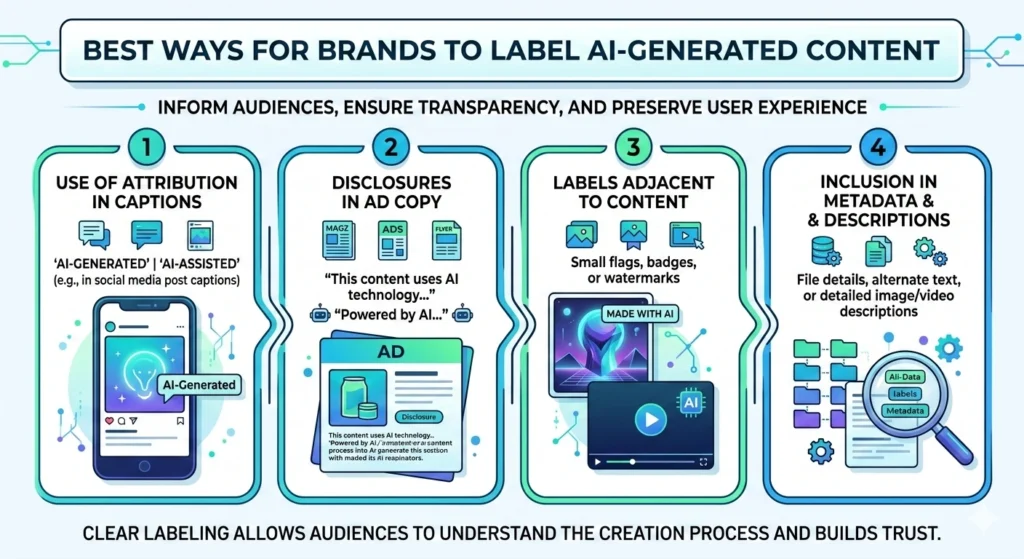
Brands are able to identify and communicate AI-powered content in easily intelligible and understandable ways to inform their audiences while preserving the user experience.
Here are a few examples of common label formats used:
- Use of an attribution, e.g., “As seen on TV” or “AI-generated or AI-assisted,” in captions
- Disclosures made within the ad copy
- Application of labels adjacent to content to allow easy identification
- Inclusion of information in the metadata or description of content.
- Clear labeling will allow audiences to see the way in which a brand created the content.
Are Subtle Hints Enough or Is Clear Disclosure Required?
Several brands utilize indirect strategies in place of direct disclosure; this can create confusion for consumers through the use of stand-alone indirect indicators.
The most effective method for clear disclosure is to:
- Make information readily available
- Provide clear examples of use
- Allow for easy identification
- Enhance understanding
- Comply with basic ethical norms in marketing and advertising
Ultimately, the majority of brands would do well to utilize simple, direct means of communicating their use of AI technology.
What Do Users Really Think About AI Ads?
How Do Consumers React When They Find Out Content Is AI-Generated?
There tends to be a range of responses to AI-generated advertisements by consumers. Some consumers find AI advertising to be creative and innovative, while others are unsure about how to feel about it.
Consumer responses include:
- Some audiences view AI advertising as exciting and contemporary.
- On the contrary, many wonder if the AI ad is authentic and showcases the creativity of humans.
- Many consumers perceive that the visual representation of an item could be deceptive or altered.
- In general, the reputation of the brand being advertised will carry a lot of weight in the response of the audience.
- Consumers who already have a level of trust with the brand will typically respond positively to an AI-generated advertisement from that brand.
Does Perception Vary Across Different Platforms or Demographics?
Yes, demographic data and platform type can definitely affect how an AI/ML technology is received. There are different responses to AI technology across different demographic groups.
A few things will impact how people will react to AI advertising and/or marketing material:
1) Typically, younger people tend to have a much easier time accepting AI technology compared to older people
2) Typically, older people are going to approach AI-based content with more skepticism compared to younger people.
3) Style and/or type of platform will impact how users respond to the content.
4) Expectations of an entire industry may also impact audiences.
Thus, brands need to understand their audience before making any decisions about how they will communicate about their use of AI.
What Are the Platform Rules Around AI Content?
What Regulations Do Social Media and Advertising Platforms Have for AI Content?
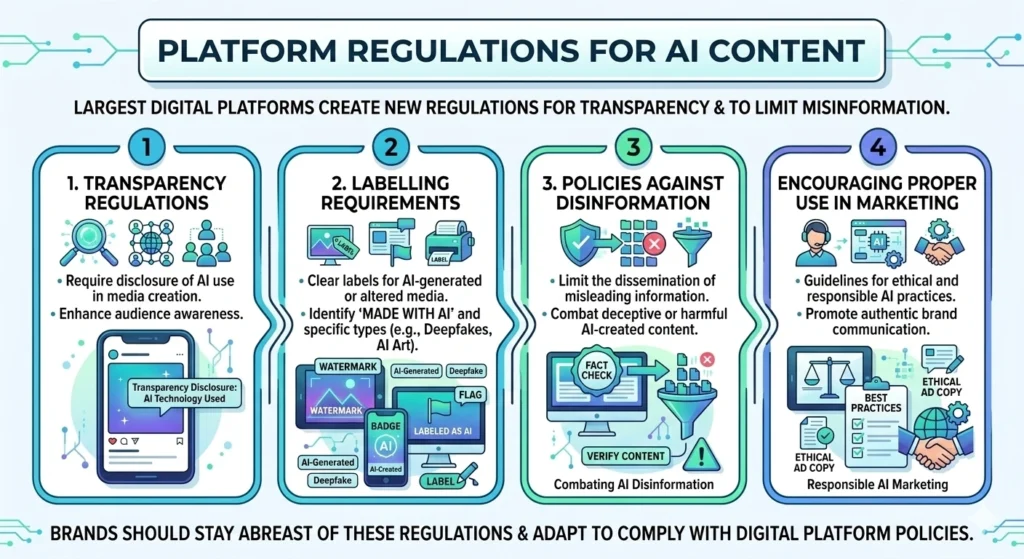
Over the past few months, more than a few of the largest digital platforms have created new regulations concerning AI-created media to provide more transparency and help limit the dissemination of misinformation.
In general, platforms will create regulations that address the following:
1) Transparency regulations concerning AI-created media,
2) Labelling requirements for any altered and/or AI-produced media,
3) Policies limiting the dissemination of disinformation,
4) Regulations to encourage proper use of AI in marketing.
Thus, brands should stay abreast of these regulations and adapt themselves to comply with the regulations set forth by the digital platforms.
What Happens If Brands Fail to Disclose AI-Generated Ads?
Failure of brands to disclose AI-generated content may put them at risk on multiple levels, as it could result in negative reactions from both platforms and audiences.
There are several potential consequences:
1) Platform operators may delete/restrict said content
2) Marketing Algorithms may restrict the reach of a specific ad based on undisclosed usage
3) Visibility and Engagement associated with the campaign would likely decrease
4) Reputational damage to the brand and regulatory scrutiny by agencies may occur.
Due to these possible risk factors, brands are finding that the importance of disclosing their use of AI-generated content is becoming increasingly paramount.
What’s the Right Approach for Brands?
How Can Brands Balance Transparency With Marketing Performance?
It is possible for brands to achieve great marketing results with transparency. Therefore, rather than hiding their use of AI for marketing purposes, they should show that it is a tool that helps them create better content.
Here are some ways brands can provide transparency:
- Include disclosure in the caption or description in a way that makes sense.
- Explain how their use of AI helps them create better content.
- Be honest about how they created their marketing campaigns, but keep them engaging.
- Make sure that providing transparency about AI does not affect a user’s experience when interacting with their marketing content.
By doing so, brands can have both transparency and successful marketing campaigns.
What Best Practices Ensure Trust Without Hurting Results?
To use AI responsibly, brands should follow several best practices. These strategies protect trust while maintaining marketing performance.
Key practices include the following:
- First, using clear and consistent AI disclosure labels
- Second, following platform policies and industry guidelines
- Furthermore, maintaining human oversight in AI-generated campaigns
- Additionally, prioritizing ethical and responsible marketing
- Ultimately, focusing on long-term audience trust
In conclusion, when brands communicate openly about AI use, they strengthen audience relationships while still benefiting from modern technology.
