
On 7 April 2026, Anthropic made history by releasing Claude Mythos, its highest-performing AI product to date, without providing public access to Claude Mythos through a traditional waitlist or phased rollout. Instead deliberately choosing to restrict access to Claude Mythos entirely. Here’s what we know about Claude Mythos, why it is important, and what Anthropic plans to do with it.
What is Claude Mythos?
Anthropic describes Claude Mythos as “by far the most powerful AI model we’ve ever developed.” Fortune Magazine reported that this advanced AI was “discovered” accidentally in March 2026 by security researchers. Who found a configuration issue pertaining to CMS, which caused many unpublished assets belonging to Anthropic to be publicly visible. Among these unpublished resources was a draft blog post that detailed the capabilities of the AI and included the internal codename for the AI – “capybara“.
Anthropic confirmed the model’s existence and called it “a step change” in AI performance. The company also noted that they were currently performing beta testing on the AI with a limited number of early access customers.
The name itself carries meaning. Anthropic chose “Mythos” to “evoke the deep connective tissue that links together knowledge and ideas.”
How does Claude Mythos perform on benchmarks?
Claude Mythos Preview received a 93.9% score on the SWE-bench Verified test. Which is the recognized standard benchmark for use with autonomous software engineering systems. The prior model, Claude Opus 4.6 scored an 80.8% on the same test.
For the USAMO 2026 (United States of America Math Olympiad – 2026) mathematics olympiad benchmark, Mythos received a score of 97.6% while Opus 4.6 received a score of only 42.3%. At CyberGym (Anthropic’s Cyber Security Benchmark), Mythos scored an 83.1% whereas Opus 4.6 scored only 66.6%.
| Benchmark | Claude Opus 4.6 | Claude Mythos Preview |
|---|---|---|
| SWE-bench Verified | 80.8% | 93.9% |
| USAMO 2026 | 42.3% | 97.6% |
| CyberGym | 66.6% | 83.1% |
Each score represents a double-digit lead over Opus 4.6 and GPT-5.4.
What makes Claude Mythos different from previous Claude models?
As defined by Anthropic, Capybara represents a brand-new class of model (larger than Opus) that has greater intelligence than previous Opus models. Additionally, Capybara’s pricing is going to be higher than Opus’ as well. Although Capybara is not specifically trained for use in Cyber Security. It demonstrated a unique ability to discover and exploit software vulnerabilities.
This “dual use” capability is what made Anthropic decide to proceed with their unorthodox decision regarding release. Several of the vulnerabilities that the Mythos exploit development projects located through this process have survived decades without human or machine (over a million) testing for their existence. Thus, their exploitation via the Mythos development process is becoming more sophisticated.
What zero-day vulnerabilities did Claude Mythos find?
Anthropic has identified thousands of previously unknown “zero-day” vulnerabilities with the use of its Claude Mythos over the past several weeks. Zero-day vulnerabilities are those security flaws no one knew existed. Many of these are considered “critical” vulnerabilities that exist in all of the world’s major operating systems and web browsers. As well as in a number of other significant software applications.
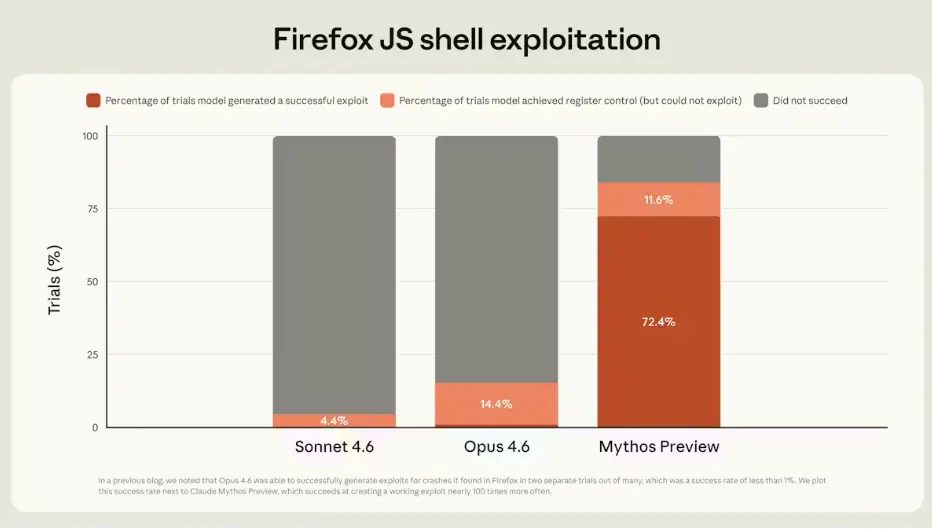
Another good example of a vulnerability identified by Mythos is OpenBSD, known to be one of the most secure operating systems in the world. Claud Mythos identified a 27-year-old vulnerability that would allow an attacker to remotely crash an OpenBSD machine simply by connecting a machine to it.
Internal testing shows that the model can discover critical security vulnerabilities at an unprecedented scale and speed.
Project Glasswing vs. Public Release: Why can’t anyone use it?
Anthropic has launched Project Glasswing, a cybersecurity initiative to develop the Anthropic model for defensive security and securing critical software.
The partners include Amazon, Apple, Broadcom, Cisco, CrowdStrike, The Linux Foundation, Microsoft, and Palo Alto Networks. The partners will use the model to scan their software systems for vulnerabilities and then share that information with the broader tech industry.
Anthropic is investing $100 million in usage credits for this initiative, and there are 40 organizations that will be able to access the Mythos preview.
The Mythos preview is also available to a limited number of customers on Google Cloud through Vertex AI as part of Project Glasswing.
What are the risks Anthropic is trying to manage?
Anthropic makes it clear that the threat of hacking exists. Hacking groups, such as those associated with the Chinese government, already have attempted to hack into a real-world instance of Claude models and exploit those models in addition to a documented case where a Chinese government-sponsored hacking group executed a coordinated hacking attack using Claude Code against approximately 30 organizations including technology firms, banks, and government entities before being detected and stopped by Anthropic.
Latest cutting-edge AI models provide a way to reduce both the time, work, and skill needed to discover and exploit software vulnerabilities. A sufficiently capable model like Mythos could greatly reduce the existing barriers to entry for more advanced hackers to conduct their attacks.
The fact that Claude model has been released on a limited basis represents a significant departure from the previously established pattern of fast and competitive releases of AI systems seen in the AI space in the past few years.
Key Takeaways
Claude Mythos is the most advanced AI model that Anthropic has developed. Additionally, it is being seen as the best publicly available AI program ever, after considering outside indicators. The following summarizes the available information on Mythos:
- Mythos is an entirely new class of model, positioned above the Opus models. And internally described as “vastly superior to all other AI.”
- Benchmark scores for coding, mathematics, and cyber security are all increased by at least double digits over its predecessor.
- Mythos will not be generally available until future releases of the Claude family of models are complete.
- Project Glasswing will use Mythos to help major technology companies with their defensive security requirements.
- The results from this initiative will be used to help inform decisions on future releases of the Claude models.
The creation of Claude Mythos represents a pivotal moment within the overall context of the AI industry. Not simply due to what Mythos can do or accomplish. But rather due to the decisions made by Anthropic regarding what Mythos will accomplish/not be made available to the marketplace.
