
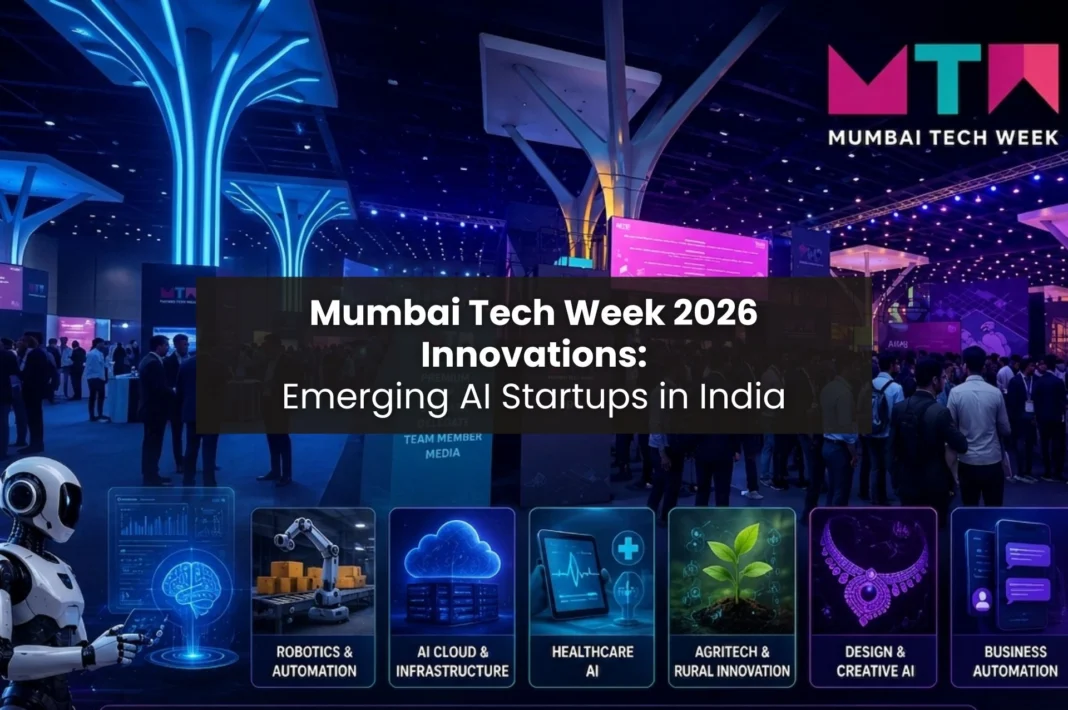
The Tech Week of Mumbai 2026 offered a platform for technology leaders, entrepreneurs, and emerging companies to connect with other like-minded individuals and develop new ideas using AI technology across industries such as healthcare, enterprise automation, cloud infrastructure, agriculture, robotics, and consumer technology.
Developing and showcasing their innovative solutions was all about how AI has been applied to solve real-world problems today as opposed to developing futuristic ideas for tomorrow. Companies from various industries showcased AI applications in various areas, including warehouse robotics, healthcare platforms, and enterprise infrastructure, which demonstrates that AI development is focused on solving real business and consumer challenges and creating practical solutions today.
Mumbai Tech Week 2026 innovations at a glance
At the 2026 Mumbai Tech Week, attendees explored a variety of innovations across the landscape of AI, automation, healthcare, agriculture, enterprise infrastructure, robotics, and consumer technology. Although each participant focused on developing a different industry, collectively these organizations showed that rising AI startups were continuing to provide practical solutions to real-world problems. Furthermore, nearly all solutions that were demonstrated could already be found being used in live situations instead of just conjectures.
| Innovation | Category | What it does |
|---|---|---|
| Atlas University: AI Warehouse Automation | Robotics & Logistics | Uses AI and robotics to identify, sort, pick, and move products inside warehouses automatically. |
| Atlas University: Autonomous Rover | Robotics & Mobility | A student-built rover designed for autonomous movement, navigation, and real-world robotics applications. |
| Atlas University: Robotics Research Projects | Educational Robotics | Student-developed robotics solutions showcasing AI, automation, and engineering concepts for practical problem-solving. |
| Domywork.ai | Business Automation | Connects multiple applications and automates repetitive tasks. |
| Vorflux | Enterprise AI | Helps organizations automate workflows and improve operational efficiency. |
| Discovr AI | AI Discovery Platform | Helps users discover tools, insights, and opportunities through AI recommendations. |
| WebEngage Black | Customer Engagement | Uses AI to improve customer communication, personalization, and retention. |
| EDT Smart Air Fryer | Consumer Technology | A smart 7-in-1 cooking appliance with multiple cooking functions. |
| Vaidya.ai | Healthcare AI | Supports healthcare providers through AI-powered workflow and patient management tools. |
| Simplismart | AI Infrastructure | Helps businesses deploy, manage, and optimize AI models efficiently. |
| Cockroach Labs | Database Infrastructure | Provides resilient database technology that minimizes downtime. |
| Neysa | AI Cloud Platform | Offers cloud infrastructure and computing resources for AI development. |
| Aurevia AI | Design Technology | Generates jewelry concepts and creative design ideas using AI. |
| Pashu Vaani | AgriTech | Helps farmers and livestock owners access information and support services. |
| Nasiko | Emerging Technology | Develops digital solutions for modern business and consumer needs. |
AI startups in India focused on business automation
Although one of the strongest themes throughout the showcase was automation. As businesses continue looking for ways to improve efficiency, several startups demonstrated how AI can reduce manual work while simultaneously increasing productivity.
1. Domywork.ai
Domywork.ai showcased a platform that connects multiple applications and automates repetitive office tasks. Consequently, businesses can save significant amounts of time without requiring advanced technical knowledge.
Key features
- Workflow automation
- App integrations
- No-code automation
- Productivity enhancement
Pricing
- Free Plan
- Power: $15.99/month
- Supercharge: $31.99/month
- Ultra: $79/month (annual billing)
2. Vorflux
Vorflux demonstrated how businesses can replace manual work with automated digital systems. Furthermore, the platform helps organizations connect different applications and automate repetitive processes using AI.
For instance, a clothing brand can automatically process customer orders and update inventory records across multiple systems without employees manually entering information.
Key features
- Enterprise automation
- AI-powered workflows
- Business process optimization
- Scalable infrastructure
Pricing:
- BYOK: Pay model providers directly + $0.25 per 1M tokens Vorflux platform fee.
- Vorflux Tokens: Pay-as-you-go with $0.15 per 1M tokens added to model costs.
- Server Cost: Starts at $0.2117/hour and scales based on server size.
- No minimum commitments or annual contracts.
3. Discovr AI
Discovr AI showcased a discovery platform that helps users quickly find relevant tools, information, and opportunities. Additionally, the platform uses AI-powered recommendations to improve search results. For example, recommendations become increasingly relevant based on what users search for and interact with.
Key features
- AI recommendations
- Smart search
- Information discovery
- Opportunity matching
Pricing: Contact Sales
4. WebEngage Black
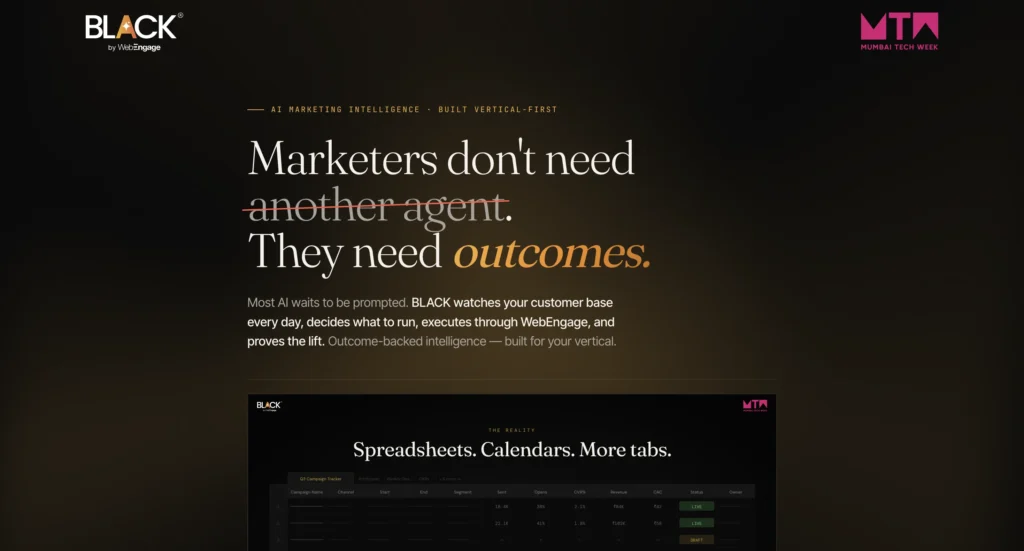
WebEngage Black shows that by using AI, you can communicate better with your customers than ever before. As a result, companies can now engage customers, retain them, and create better personalized marketing campaigns.
Key features:
- Personalized messages
- Automated engagement with your customers
- Optimized marketing
- Increased retention.
Pricing: Custom pricing solutions available based on individual business type.
Emerging AI startups transforming enterprise infrastructure
While customer-facing applications attracted attention, infrastructure-focused startups also played an important role. In fact, these technologies provide the foundation required to deploy and scale AI systems.
5. Simplismart
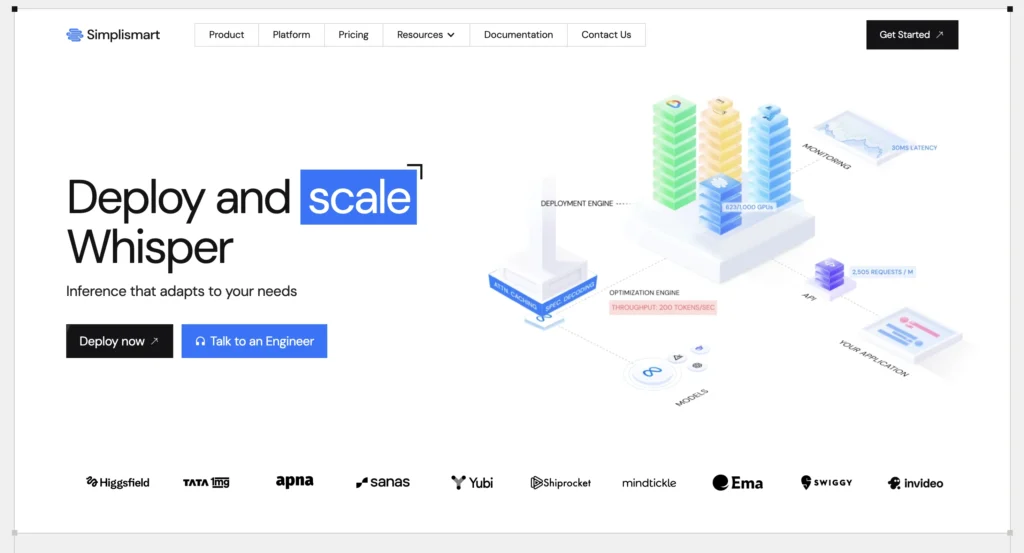
Simplismart showcased a platform that allows businesses to deploy AI models without dealing with complex technical infrastructure. Instead, companies can upload their AI models and begin using them through cloud-based tools. For example, a business can deploy an AI chatbot and make it available to customers in just a few steps.
Key features
- AI deployment tools
- AI infrastructure management
- Cloud-based deployment
- AI transcription support
Pricing:
- API access with 150+ AI models on a pay-as-you-go basis.
- LLM pricing starts at $0.06 per 1M tokens (Gemma 3 1B) and goes up to $3.90 per 1M tokens (DeepSeek-R1).
- Image generation pricing starts at $0.03 per image (Flux Dev) and goes up to $0.28 per image (SDXL).
- Speech-to-text pricing starts at $0.0018 per audio minute (Whisper v3 Turbo).
- Dedicated GPU pricing starts at $1.20 per GPU hour (NVIDIA T4) and goes up to $5.20 per GPU hour (NVIDIA H200).
- Private cloud, on-premise, and enterprise deployments are available with custom pricing.
6. Neysa
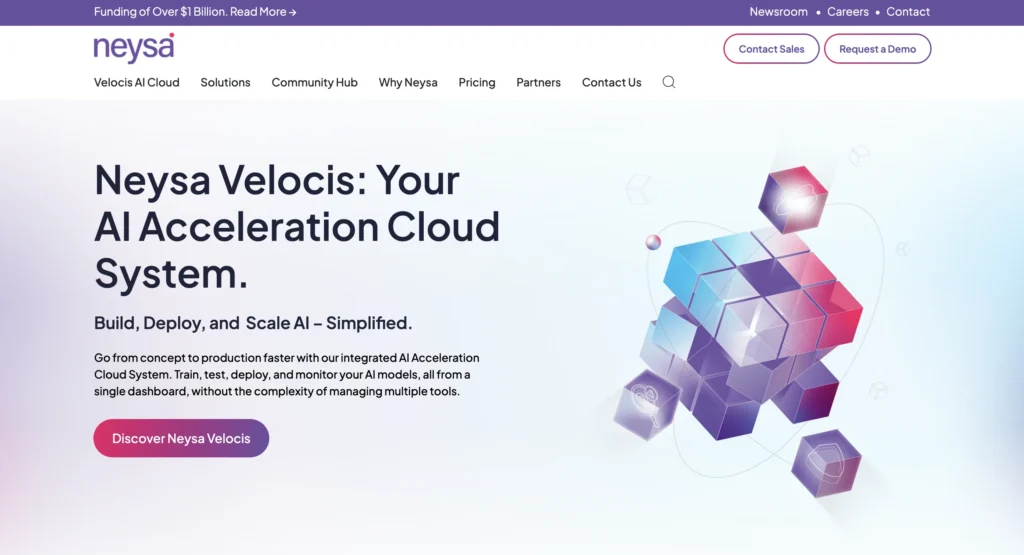
Neysa presented its AI acceleration cloud platform designed to help organizations build, run, and scale AI products more efficiently. For example, a company can use Neysa to operate an AI chatbot serving thousands of users without purchasing expensive hardware.
Key features
- AI cloud infrastructure
- GPU computing
- AI model deployment
- Enterprise scalability
Pricing:
- AI cloud instances start at $1.17/hour (NVIDIA L4 GPU) or $428.37/month with a 36-month commitment.
- NVIDIA L40S instances start at $1.95/hour or $713.96/month (36-month reserved).
- NVIDIA H100 SXM and H100 NVL instances start at $4.39/hour or $1,779.96/month (36-month reserved).
- NVIDIA H200 SXM instances start at $4.73/hour or $1,866.78/month (36-month reserved).
- Save up to 40% with reserved pricing plans.
- Pay only for GPU compute usage with no charges for data ingress, egress, API calls, or inference transactions.
- Included at no extra cost: vCPUs, system RAM, video RAM, storage options, networking, managed Kubernetes, managed VM instances, Jupyter Notebooks, ML lifecycle integrations, and inference endpoints.
- Enterprise and custom configurations available on request.
To understand the broader ecosystem of AI infrastructure providers powering platforms like Neysa, you can explore ComputeStacker, which compares global compute and GPU cloud providers for scalable AI workloads.
7. Cockroach Labs
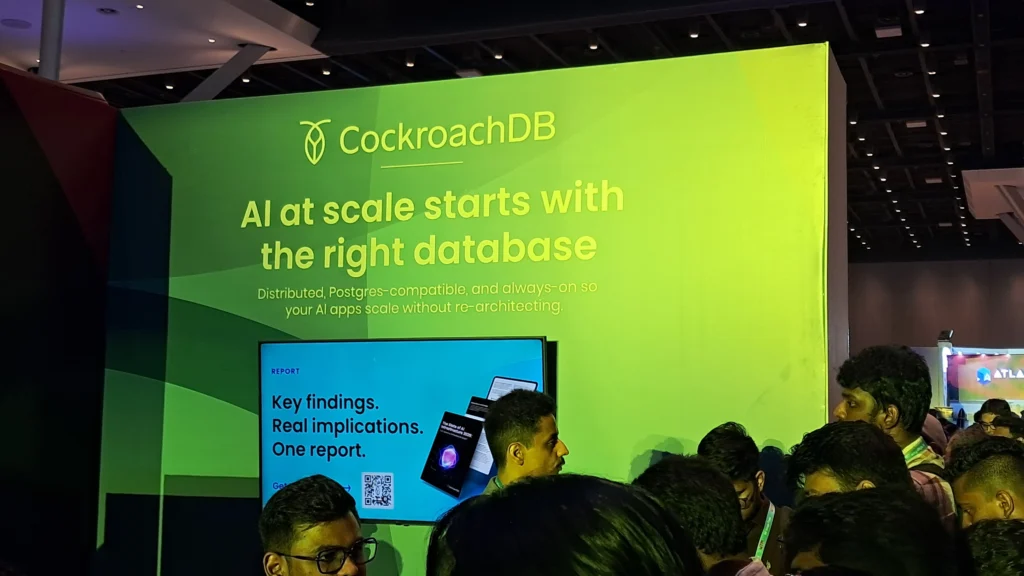
Cockroach Labs demonstrated database technology designed to keep applications running even if servers fail. Consequently, businesses can reduce downtime and avoid service interruptions. Using an example similar to food delivery platforms, if one system fails, traffic can automatically shift to another available system.
Key features
- Distributed databases
- High availability
- Automatic failover
- Enterprise reliability
Pricing:
- The free tier includes up to 10 GiB of storage and 50 million request units (RUs) per month.
- The basic plan charges $0.20 per 1 million request units and $0.50 per GiB of storage per month.
- The standard plan starts at $0.113 per vCPU/hour and around $0.00103–$0.00123 per GiB/hour of storage, depending on the region.
- The advanced plan starts at $0.42/hour for 2 vCPUs and scales up to $4.87/hour for 32 vCPUs.
- The advanced security plan starts at $0.48/hour for 2 vCPUs and scales up to $5.60/hour for 32 vCPUs.
- Data transfer, backups, and change data capture (CDC) are charged separately based on usage.
- Spend limits can be configured to prevent unexpected costs.
How AI startups in India are solving industry-specific challenges
Beyond automation and infrastructure, several startups demonstrated how AI can address challenges in specific industries.
8. Vaidya.ai
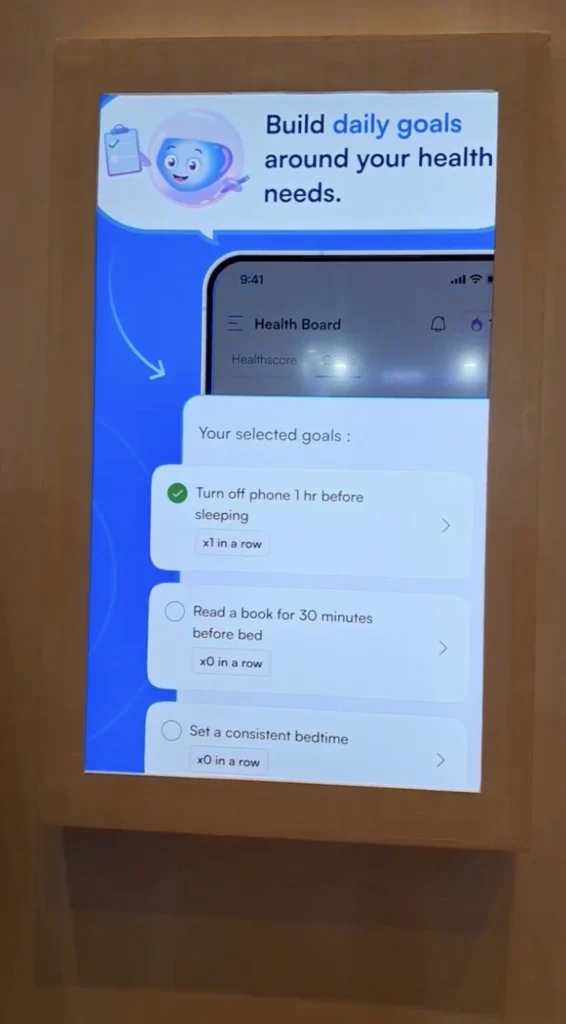
Vaidya.ai showcased healthcare-focused AI solutions designed to improve patient management and healthcare accessibility. For example, the platform can help healthcare providers serve patients in areas where medical facilities are limited.
Key features
- Healthcare workflow automation
- Patient management
- Healthcare accessibility
- Clinical support tools
Pricing: Free to everyone.
9. Aurevia AI

Aurevia AI demonstrated how artificial intelligence can assist jewelry designers by generating design concepts and creative ideas within minutes. For example, designers can quickly create custom concepts when existing designs do not meet customer requirements.
Key features
- AI-generated jewelry concepts
- Design inspiration
- Research assistance
- Creative workflow support
Pricing:
- Solo: ₹1,999 / month
- Studio: ₹7,999 / month
- Atelier: ₹19,999 / month
- House: ₹39,999 / month
- Extra seat: ₹999 / month
- Credits: ₹1 each (₹1.05 effective with 5% fee)
10. Pashu Vaani
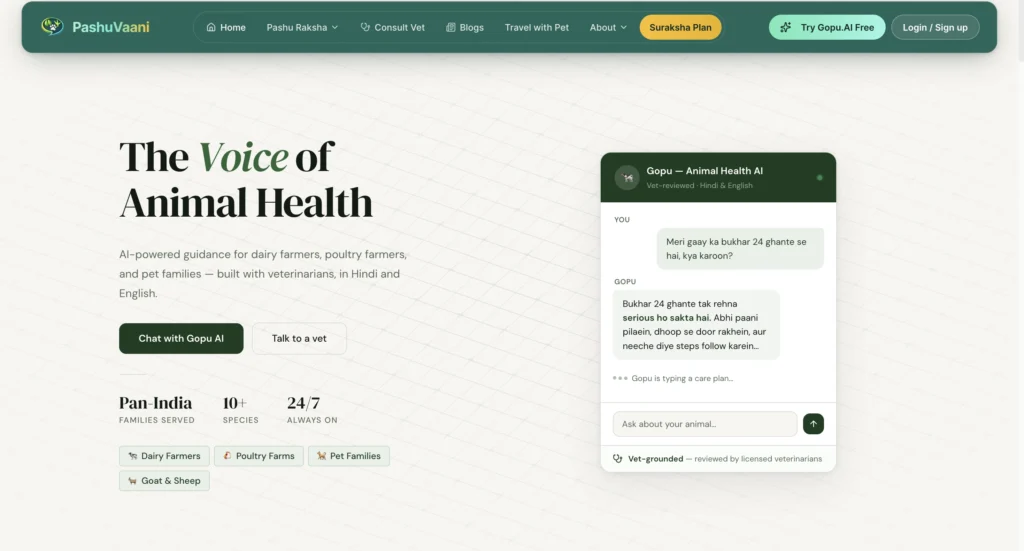
Pashu Vaani showcases the use of technology to help farmers and livestock owners by offering them the resources and information needed to succeed. One way they do this is by providing farmers with assistance when their livestock are ill or need special treatment.
Key features:
- Livestock Support
- Agricultural Information
- Assistance for Farmers
- Rural Technology Services
Pricing: Free
Robotics and smart technology at Mumbai Tech Week 2026
In addition to software innovations, visitors also experienced physical products and robotics demonstrations. As a result, the showcase highlighted how innovation extends beyond digital platforms.
11. Atlas University: AI Warehouse Automation
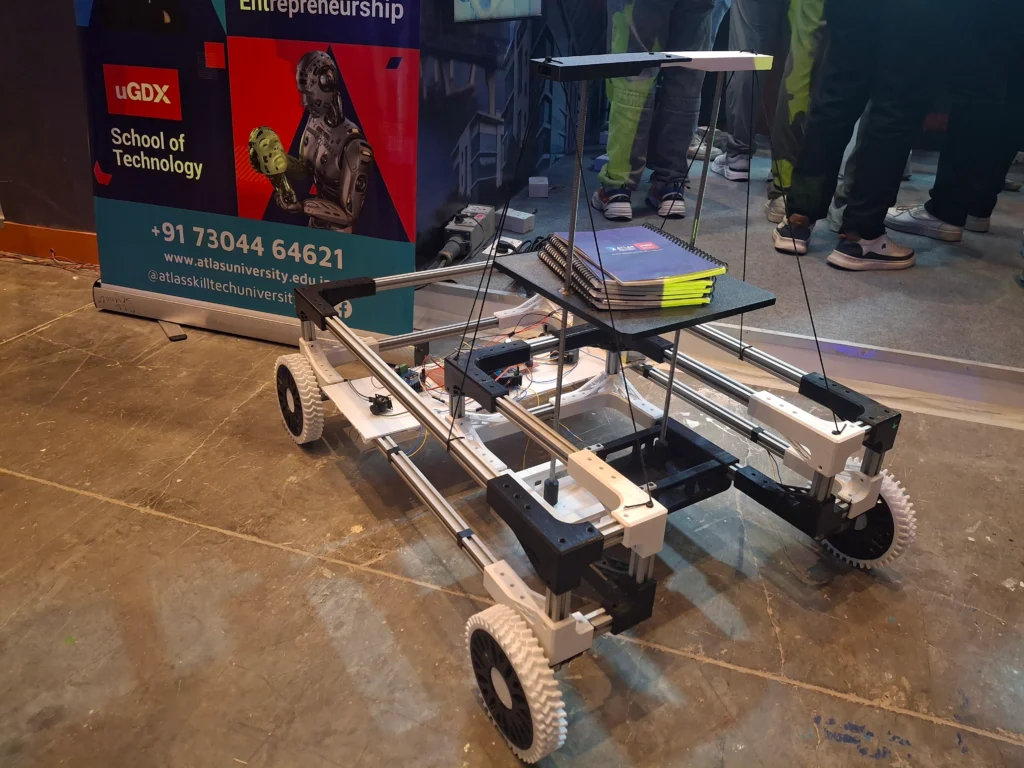
Atlas University demonstrated robots capable of identifying, sorting, picking, and moving products within warehouses automatically. As a result, businesses can improve inventory management, reduce manual labor, and increase operational efficiency.
Key features
- Warehouse robotics
- Automated sorting
- Inventory management
- Logistics automation
Pricing: It is an educational and research project
12. Atlas University Robotics Showcase
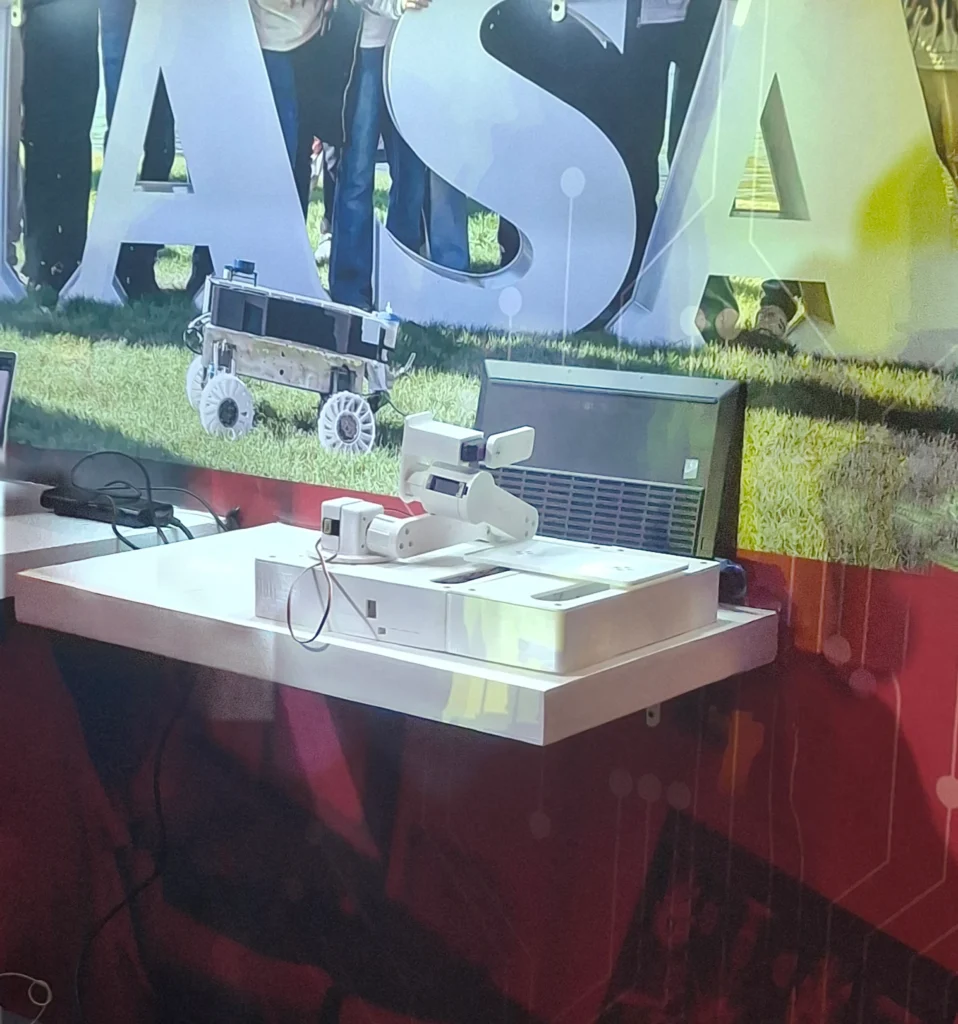
Apart from warehouse automation, Atlas University also showcased robotics projects and autonomous rover technology developed by students and researchers. Furthermore, these projects demonstrated navigation systems, automation capabilities, and practical engineering applications that could contribute to future industrial and mobility solutions.
Key features
- Autonomous robotics
- Rover technology
- Student-led innovation
- AI-powered automation
Pricing: It is an educational and research project
13. EDT Smart Air Fryer
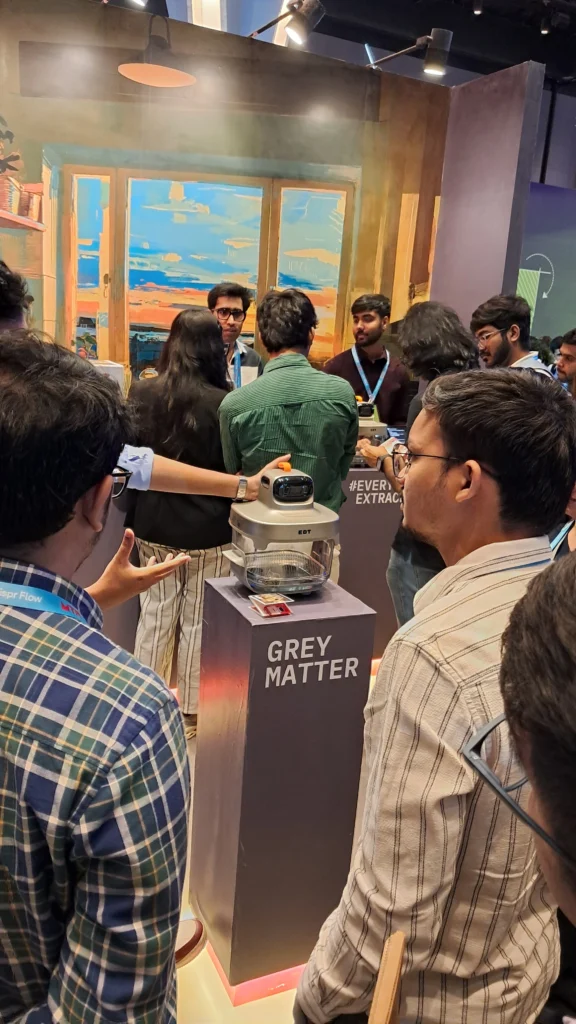
EDT introduced a premium 7-in-1 smart air fryer capable of performing multiple cooking functions through a single appliance. Consequently, users can cook different types of meals while reducing the need for multiple kitchen devices.
Key features
- 7-in-1 cooking modes
- Smart cooking technology
- Pure-glass design
- Energy-efficient operation
Pricing: Varies by retailer and model
Other emerging AI startups and innovations worth watching
14. Nasiko
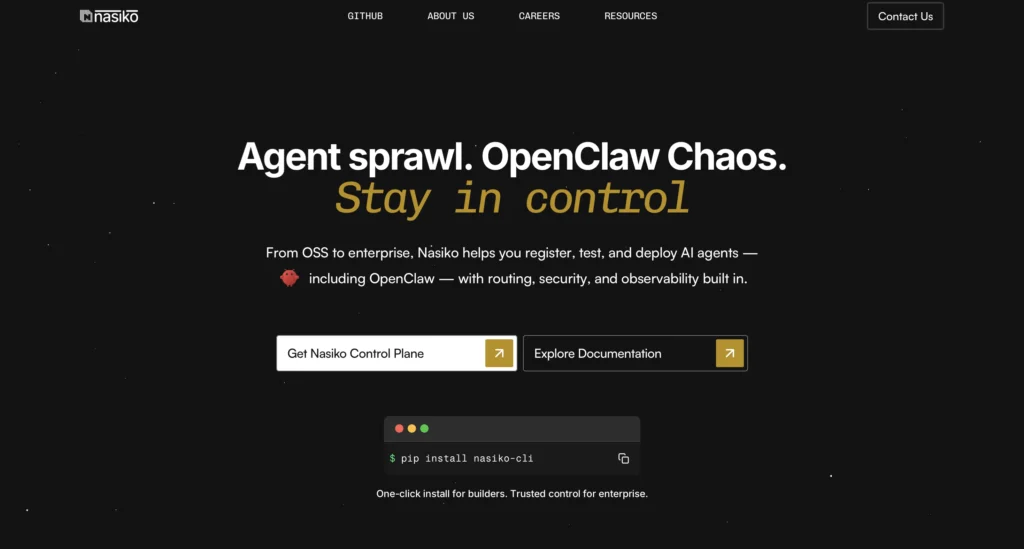
Nasiko showcased innovative digital products designed to solve common business and consumer challenges. For example, a business could use an AI-powered document processing tool to automatically extract important information and organize files, thereby reducing manual work.
Key features
- Digital innovation tools
- AI-powered automation
- Business productivity solutions
- Consumer technology applications
Pricing: Contact Sales
What stood out at Mumbai Tech Week 2026
Builders over buzzwords
Perhaps the most noticeable trend was the emphasis on building practical solutions rather than chasing industry buzzwords.
Real products instead of concepts
Many startups demonstrated products that are already being tested, deployed, or actively used.
Practical AI adoption
Instead of showcasing AI for its own sake, exhibitors focused on solving specific business and consumer problems.
Infrastructure becoming a major focus
Cloud platforms, deployment tools, and database systems received considerable attention. Consequently, infrastructure emerged as one of the most important themes of the showcase.
Growing maturity of the Indian startup ecosystem
Overall, the event demonstrated how AI startups in India are increasingly focusing on scalability, execution, and commercial viability.
This growing focus on execution mirrors the broader momentum seen across the Indian startup ecosystem, where AI startups are increasingly moving from experimentation to real-world deployment.
The future of emerging AI startups in India
I attended the Mumbai Innovation Showcase and found it to be a compact yet highly impactful event. In a short span of time, it brought together a wide range of innovative startups and technologies under one roof.
While some notable announcements were certainly made during the conference, they pale in comparison to the increasing number of builders who were actually making something happen.
The common belief among attendees was that AI would have a significant role in India’s next wave of growth. More importantly, the event highlighted a shift from experimentation toward implementation.
One particular thing that struck me during the event was the focus on execution. The builders mattered more than the buzzwords. Likewise, product demonstrations carried far more weight than forecasts and predictions.
Based on my observations, the next chapter for the Indian AI ecosystem will be defined by execution, infrastructure, and measurable impact rather than hype. Ultimately, the innovation showcases at Mumbai Tech Week 2026 made it clear that emerging AI startups are no longer simply exploring possibilities; they are actively building the future.
FAQs
To begin with, Mumbai Tech Week 2026 showcased innovations in AI, and furthermore, robotics and healthcare solutions were highlighted. In addition, cloud infrastructure and agriculture tech were featured, and business automation tools demonstrated strong impact. As a result, the event brought multiple industries together, and ultimately, it reflected a rapidly evolving innovation ecosystem.
Several AI startups in India participated, including Domywork.ai, Simplismart, Neysa, Vaidya.ai, Aurevia AI, Discovr AI, and WebEngage Black.
Emerging AI startups are helping businesses automate workflows, improve customer engagement, optimize operations, and deploy AI solutions more efficiently.
The event featured AI warehouse automation, autonomous rovers, and student-built robotics projects that demonstrated real-world applications of robotics and AI.
Mumbai Tech Week 2026 provided a platform for AI startups in India to showcase innovations, connect with industry leaders, and demonstrate practical technology solutions.
