
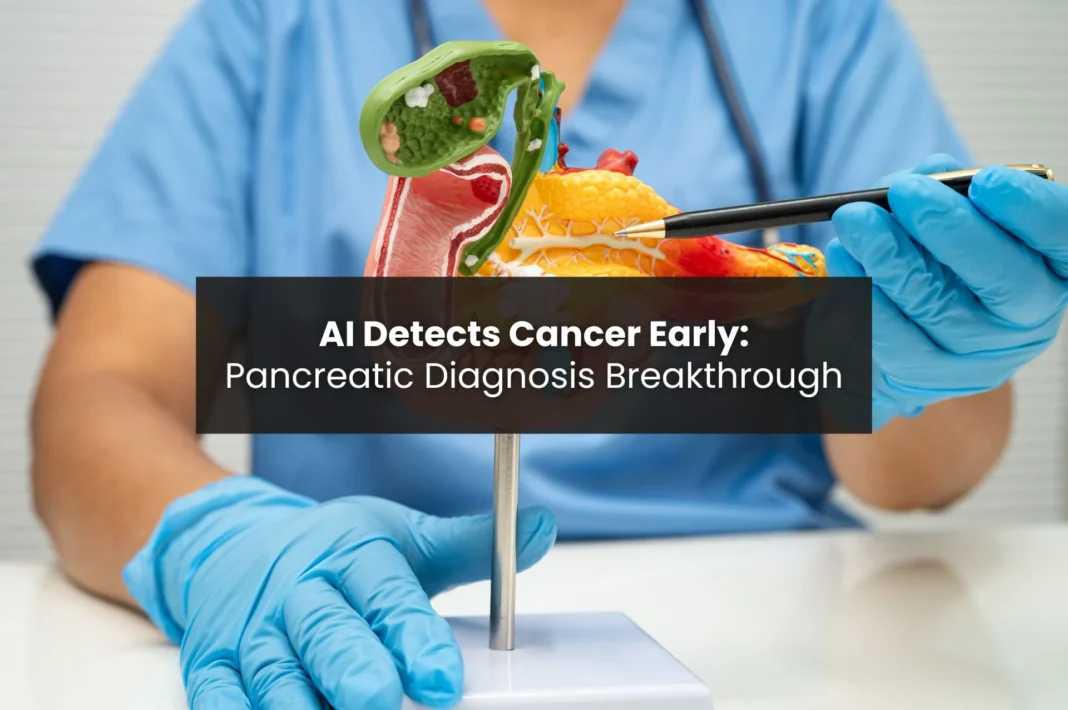
Artificial intelligence is beginning to solve one of the biggest problems in oncology: detecting pancreatic cancer early. Doctors often miss this disease until it reaches an advanced stage because it develops silently and shows few symptoms. AI models are changing that by analyzing CT scans in far greater detail than the human eye can manage. These systems can identify subtle tissue changes years before a formal diagnosis, making AI in cancer detection a breakthrough. This shift could move cancer care from late-stage treatment to early intervention, where survival chances are much higher.
As AI continues to reshape healthcare, it is rapidly improving diagnostics, medical imaging, and early disease detection across the industry.
How does the AI model detect pancreatic cancer years before clinical diagnosis?
Scientists have been able to create AI technologies capable of identifying pancreatic cancer at a stage when it could not be detected by physicians. These tools do not simply depend on observable growth but analyze underlying patterns within the image.
This makes it possible for doctors to observe their patients much earlier than usual and take preventive measures. Often, AI can spot the illness several months or years in advance.
How does AI identify hidden cancer patterns in CT scans?
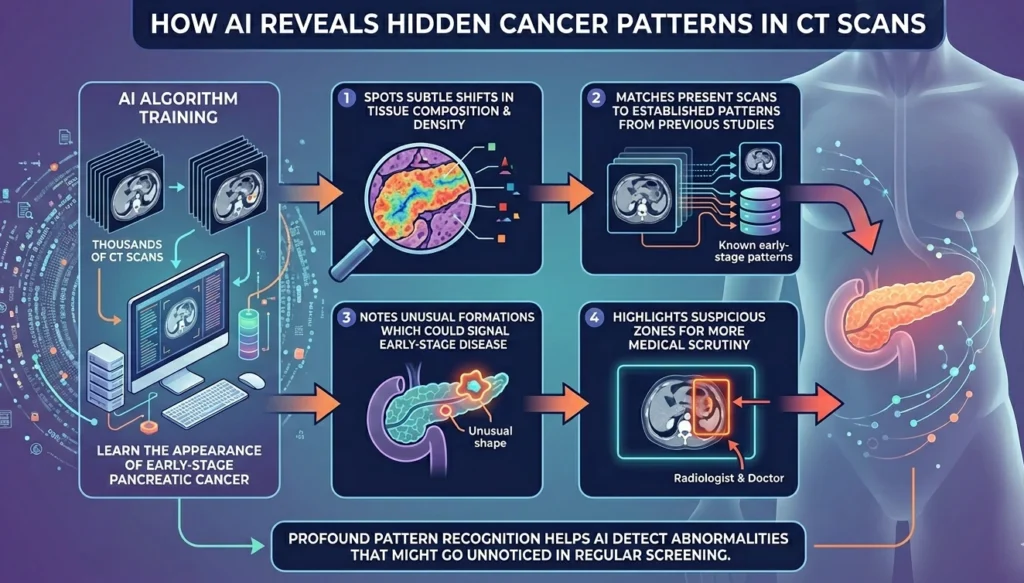
AI algorithms train on thousands of CT scans to learn the appearance of early-stage pancreatic cancer. They do not merely search for tumors but examine intricate patterns within the pancreas.
- They spot subtle shifts in tissue composition and density
- They match present scans to established patterns from previous studies
- They note unusual formations which could signal early-stage disease
- They highlight suspicious zones for more medical scrutiny
Such profound pattern recognition helps AI detect abnormalities that might go unnoticed in regular screening.
How does AI help in the early detection of pancreatic cancer?
Early detection proves to be very helpful in this context. The majority of the pancreatic cancers detected are at their advanced stages. However, artificial intelligence offers to change this pattern by detecting the illness in its earlier stages when it can be managed effectively.
Earlier detection allows the medical practitioner to carry out operations on the patient or begin treatment immediately. This greatly improves the odds of survival and prevents the fast advancement of the disease. Patients with early-stage illnesses have a higher success rate than those who have been detected at their advanced stages.
What is the role of AI in cancer detection?
The integration of AI has become critical in contemporary healthcare. The technology facilitates doctors by increasing precision and efficiency in diagnosing medical conditions. Artificial intelligence does not replace radiologists but works in collaboration with them to make decisions.
- It lowers the risk of misdiagnosis.
- Provides consistency in all diagnoses.
- Increases the speed of analyzing scans and writing reports.
- It assists in spotting intricate patterns that humans may not be able to spot.
Most of the time, AI achieves the same level of competence as professional radiologists in diagnosing cancerous diseases.
As AI continues to transform healthcare, global initiatives highlight rapid advancements in medical diagnostics and early cancer detection.
How does AI improve understanding of early symptoms and risk indicators?
Pancreatic cancer often develops without clear symptoms, which makes early diagnosis difficult. AI helps bridge this gap by identifying early risk indicators before symptoms appear.
It connects imaging data with disease progression and highlights patterns linked to cancer development. This allows doctors to identify high-risk patients and monitor them more closely. It also helps detect indirect warning signs, enabling earlier intervention even when patients feel healthy.
Key industry statistics on pancreatic cancer and AI in detection
It continues to be among the most fatal forms of cancer globally due to being diagnosed late.
- The global survival rate is about 10–11% over a period of 5 years
(Source: PubMed Central) - About 80–85% of pancreatic cancer patients are diagnosed late
(Source: PubMed Central) - Early detection of cancer can lead to improved chances of survival
(Source: Frontiers in Oncology) - AI can detect early signs of cancer very accurately
(Source: ScienceDirect) - Cancer can be detected months to years earlier with the help of AI
(Source: News-Medical) - Earlier detection can significantly affect long-term survival
(Source: Frontiers in Oncology)
All of these figures demonstrate the importance of more advanced screening techniques and how AI plays a very significant role in this process.
What are the challenges in clinical adoption of AI systems?
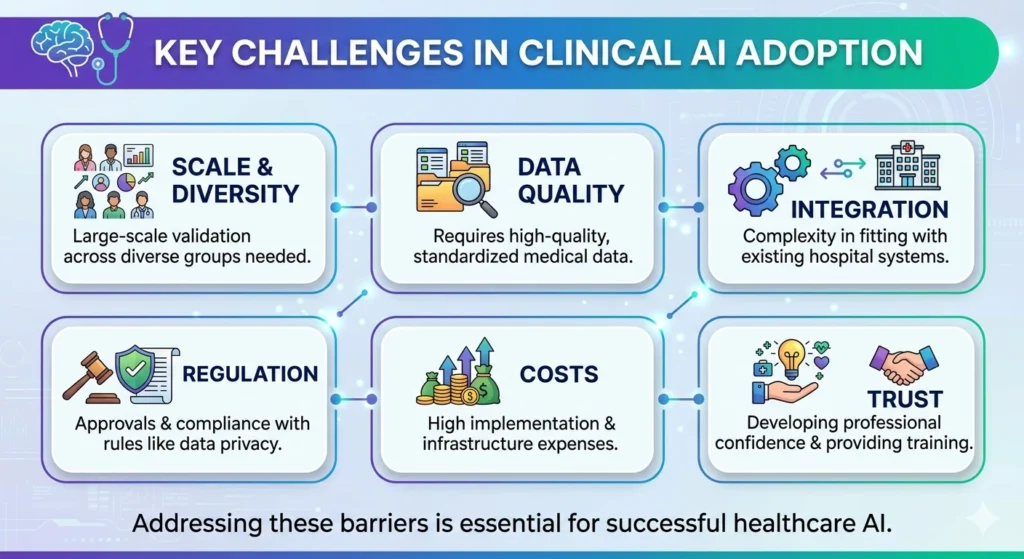
- Requires large-scale clinical validation across diverse populations
- Needs high-quality, standardized medical imaging data
- Risk of false positives and overdiagnosis
- Integration with existing hospital systems can be complex
- High implementation and infrastructure costs
- Regulatory approvals and compliance requirements
- Data privacy and security concerns
- Limited trust and training among healthcare professionals
Who can benefit the most from early AI detection?
Early AI detection can make the biggest difference for people who face a higher risk of pancreatic cancer but may not show clear symptoms. Since routine screening is not common for this disease, AI helps identify risk earlier and allows doctors to monitor these individuals more closely.
- Patients with a family history of pancreatic cancer
- People living with chronic pancreatitis
- Individuals with new-onset diabetes, especially later in life
- Older adults who fall into higher-risk age groups
By focusing on these groups, doctors can use AI to detect warning signs earlier and take preventive action before the disease progresses.
How does AI detection compare with traditional cancer detection methods?
| Aspect | Traditional methods | AI detection |
|---|---|---|
| Detection stage | Detects cancer at a later stage | Detects cancer at an early stage |
| Basis of diagnosis | Relies on visible tumors and symptoms | Focuses on hidden patterns and early signals |
| Approach | Depends on observable physical changes | Analyzes microscopic and pattern-based changes |
| Accuracy | May miss subtle early signs | Identifies early abnormalities with higher precision |
| Diagnosis timing | Often, after symptoms appear | Often before symptoms appear |
| Decision support | Fully dependent on human interpretation | Often, after symptoms appear |
What is the future of AI-driven pancreatic cancer diagnosis and treatment?
Artificial intelligence is transforming how doctors detect and treat pancreatic cancer. It enables earlier diagnosis and allows doctors to act before the disease reaches advanced stages. Healthcare systems are beginning to adopt AI tools, and researchers are improving their accuracy and reliability. Doctors can use these systems to identify high-risk patients, start treatment sooner, and improve survival outcomes. As adoption grows, AI will become a standard part of cancer screening and diagnosis. This shift will help move pancreatic cancer care from late detection to early intervention, ultimately saving more lives.
