
When AI voices start sounding human
The nature of someone’s conversation does not correspond to a perfect script. In conversations, people might have to pause while choosing meaningful words or laugh during a speech and change their tone when they are surprised. Moreover, interruptions might seem sudden and without thinking.
Fortunately, this reality is addressed by AI voice technology. Contemporary voice agents can reply instantly, adjust their delivery to meet the requirements of interlocutors, and deal with interruptions, while voice generators may create any speech with an emotional tone. Also, in spoken conversations, a user feels more like taking part in a conversation than responding.
The difference now lies between the mentioned words. In order to sound convincing, AI voice must not just pronounce words clearly. It also has to understand the meaning of the conversation and know when to reply.
What makes an AI voice sound less like AI?
Realistic AI voices go beyond just saying words correctly. They analyze people’s speech patterns and react appropriately to the conversation.
- Natural pauses: When speaking, humans stop from time to time. AI voices must incorporate pauses into the conversation and avoid delivering every sentence at a similar speed.
- Tone and emotion: The voice must adapt its tone according to different situations. It can sound enthusiastic when communicating positive news and soft when talking about something serious.
- Laughter and specific voice details: Small sounds make the speech more expressive. They include laughing, sighing, and hesitating.
- Interruptions and speaking turns: People tend to interrupt each other in conversations. AI agents should be able to identify interruptions and let users speak without delay.
- Understanding the context of the conversation: Natural conversations depend on what has been said before. AI needs to consider the context and avoid treating every new phrase as a new question.
- Response speed: Even the best answer can sound awkward if the voice gives the response too late or when everybody interviewed has not finished speaking.
These details separate a voice that simply reads text from one that can participate in a conversation.
The different types of AI voice platforms and apps
Different AI voice solutions have different functions depending on their application. For example, while some AI voice services help automate customer interaction functions of the business, others have the capability to produce voice-overs or communicate with the AI.
- AI voice agent software: such software aids companies in creating AI agents that will be used to make phone calls, provide customer support, schedule meetings, etc. They are focused on providing real-time responses, turn-taking, and successful completion of the task at hand.
- AI voice generators: such systems take written documents and convert them to the spoken word. They have features to produce voices of different characteristics, with different accents in different languages, which can be applied to films, podcasts, audiobooks, etc.
- Conversational AI apps: apps that allow for direct communication with the AI. The main goal of such programs is to help users get answers to questions, brainstorm, study, or fulfill other everyday demands using voice interaction.
AI companion apps are also based on voice technologies but have different goals: voice capabilities are applied to provide people with opportunities for continuous personal communication.
Best AI voice agent platforms for natural conversations
Voice agent solutions enable companies to create solutions capable of taking calls, recognizing requests, and answering questions without following strict scripts. The main aim of these technologies is to enable real conversations and high-quality voice and make it possible to hold the conversation.
1. ElevenLabs
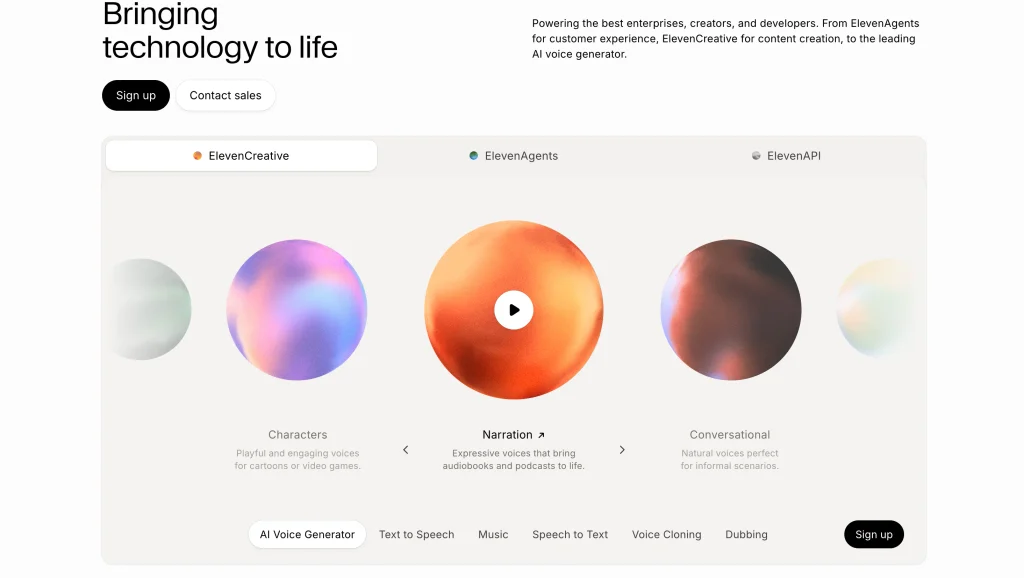
ElevenLabs provides tools for generating voices and for creating conversational AI. The platform gives developers access to tools for controlling the flow of their conversations, and the voice algorithm is able to add more expressiveness to the generated voices to avoid mechanical speech. Businesses can take advantage of ElevenLabs technologies to create their customer care agents or virtual receptionists.
Pricing: Free. The Starter plan costs $6/month, the Creator level is $22/month, the Pro is $99/month, and the Scale is $299/month, while the Business plan is $990/month. Enterprise pricing is customized.
Best for: Companies in need of a dramatic AI voice and a custom voice agent.
2. Retell AI
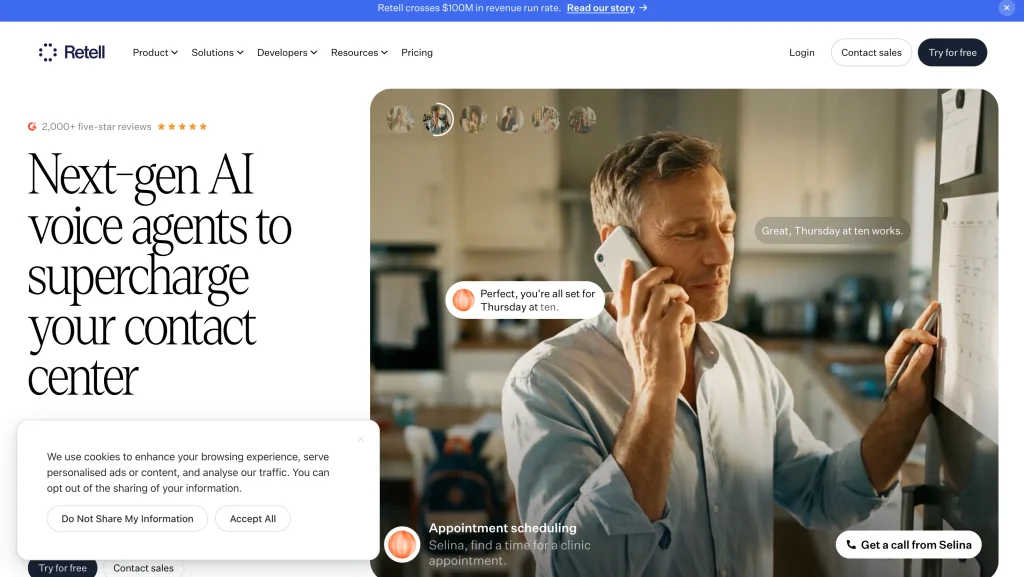
RetellAI assists companies in developing their own AI agents capable of making phone calls. Users can set up the communication, interruption processing, and other aspects of call scenarios. RetellAI’s emphasis on conversational flow allows it to be great for providing customer service or for any sales calls.
Pricing: Pay-as-you-go voice AI service is charged between $0.07 and $0.31 depending on the model and configuration. Enterprise pricing is personalized.
Best for: Companies that want to automate their calls, both incoming and outgoing.
3. Vapi
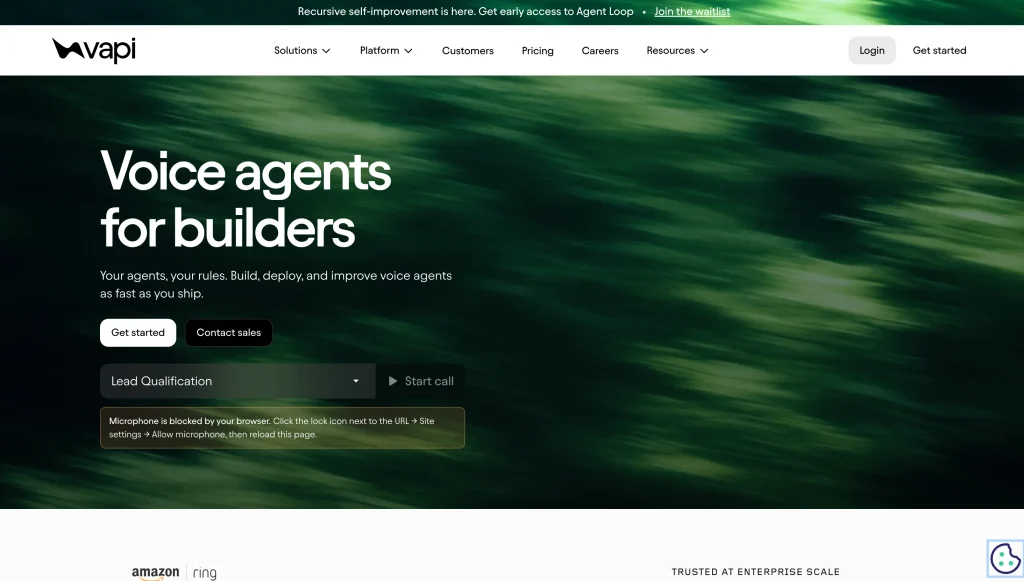
Vapi provides developers with a set of tools for creating and deploying voice agents. It integrates speech recognition, language models, and voice providers, which gives development teams control over how an agent perceives and interacts. Developers have the option of configuring the way interruption handling is done and can connect their agents with outside services.
Pricing: The program can be used with a usage-only plan that costs $0.05 for every minute of hosting by Vapi, with further charges for particular models, transcriptions, and voice providers. The Core plan costs $29 per month, before usage charges. The app also offers a starter credit of $5.
Best for: Developers who are looking for flexibility in the process of building voice agents.
4. Bland AI
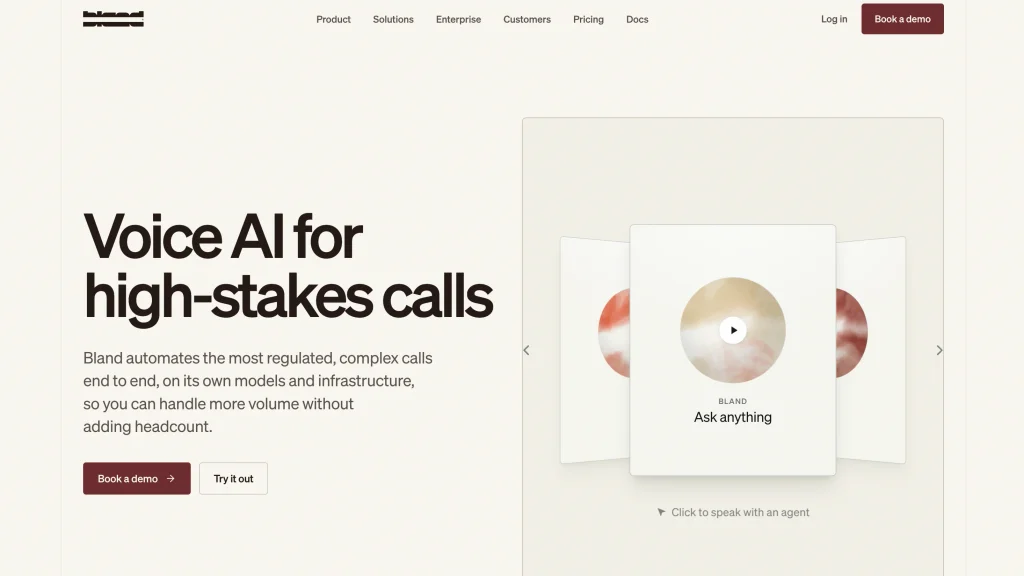
Bland AI offers companies the ability to streamline discussions through the use of machine learning. Companies can create agents to help with support, scheduling, and making sales calls. The technology is specifically geared towards making phone calls and achieving tasks rather than just responding vocally.
Pricing: The Afterplan stipulates that $0.14 per minute is payable only when it is used, with no ongoing monthly fee. The Builder plan is less expensive at $0.12 per minute but requires a monthly fee of $299. Organizations have to seek clarification on additional charges related to telephony.
Best for: This invention is best for businesses that need to automate large volumes of phone calls.
5. Synthflow AI
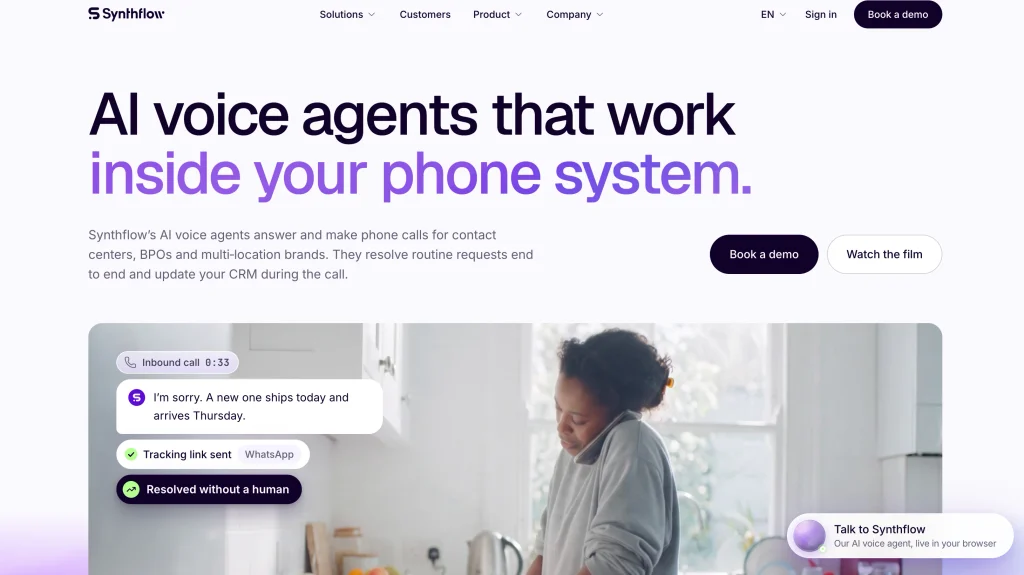
Synthflow AI allows businesses to set up artificial intelligence dialing assistants without needing to have the entire technology developed from the ground up. Businesses can benefit from Synthflow’s workflow capabilities for automating client communications, assessing the quality of leads, and making appointments. The solution is ideal for enterprises wanting to take advantage of dialogue automation without too much programming involvement.
Pricing: The pricing model applied by Synthflow is based on the amount of use or the business plan. The latest price depends on the number of calls, offered functions, and conditions; it is advisable to address the supplier directly for your quote instead of referring to outdated initial pricing.
Best for: Companies that are going to bring voice agents to life with minimal coding experience.
6. PolyAI
PolyAI provides companies with the technology needed to use a vocal assistant in their customer service efforts. The agents built on the technology allow them to provide customers with support by communicating with them over the phone. Businesses using PolyAI are able to manage regular operations but still choose to redirect more complicated requests to humans.
Pricing: Custom enterprise pricing. Contact PolyAI to receive a quote for your needs.
Best for: Large enterprises seeking conversational AI solutions.
Best AI voice generators for realistic and expressive speech
Voice generators focus on how speech sounds rather than managing an entire phone conversation. They help creators, businesses, and developers turn written content into spoken audio with different voices, accents, and delivery styles.
7. Fish Audio
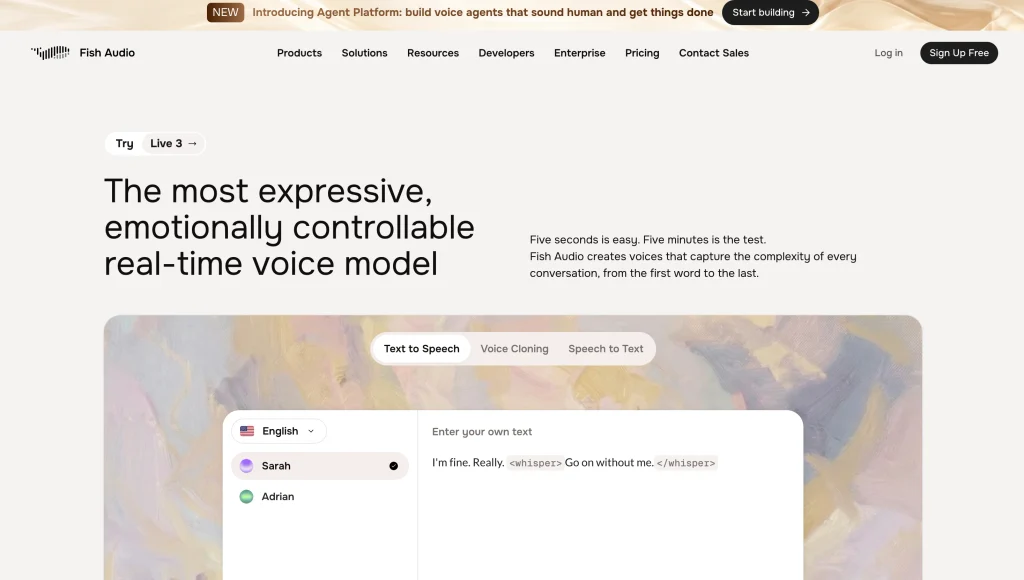
Fish Audio provides AI-generated audio output that mimics human speaking style. The platform includes voice cloning and text-to-speech software, which allows artists to control how their voice sounds. The technology has been designed to go beyond email-style recordings through the use of emotional speech models.
Pricing: A free account comes with what Fish Audio calls 8000 credits per month. The Plus subscription costs $15/month or $132/year if billed annually. The Pro plan charges $100 on a monthly basis or $900 per year when paid yearly.
Best for: People looking to use artificial voice technology in their work.
For a closer look at its voice cloning features, read our guide to using Fish Audio as a free AI voice cloning tool.
8. Cartesia
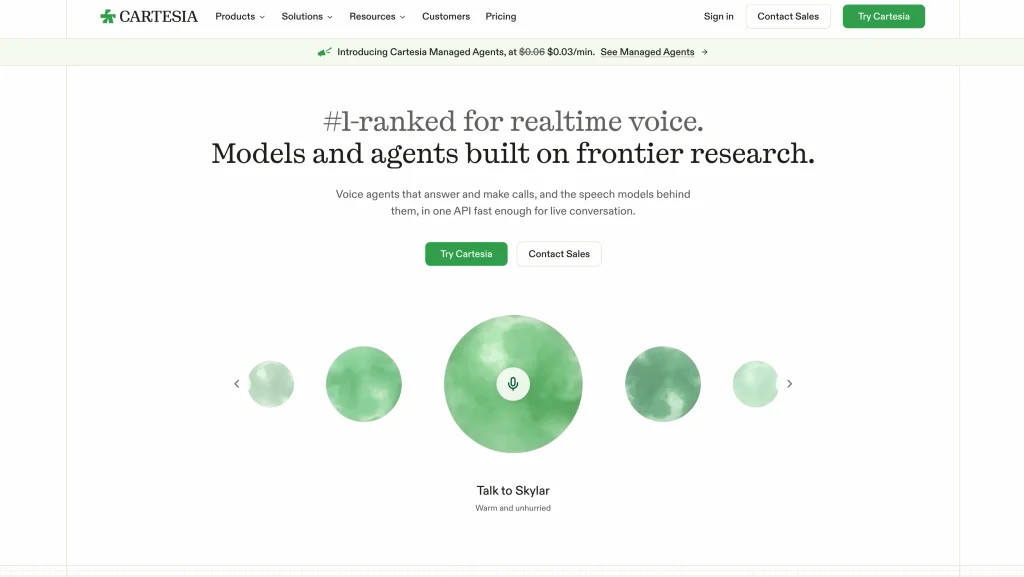
Cartesia builds projects that involve rapid and realistic audio. Sonic is its series of models to be employed in low-latency speech generation and thus is relevant to developers of voice assistants and products for conversational purposes.
Pricing: The Basic plan is free and includes 20,000 credits per month. Pro pricing is $5 per month; Startup is $49; Scale is $299.
Best for: Those building real-time voice projects.
9. Murf AI
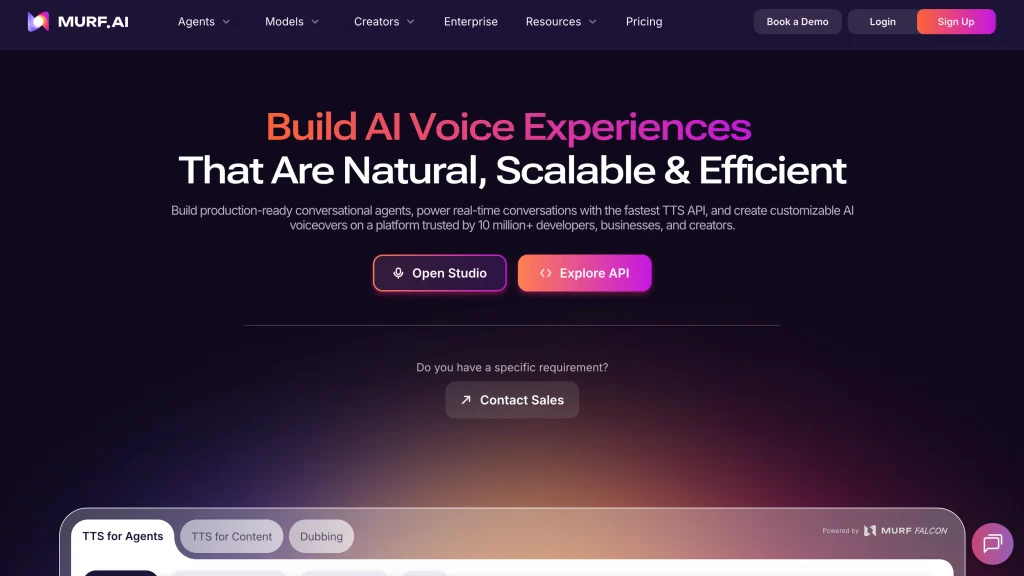
Murf AI enables individuals to generate voiceovers for a range of material, such as videos, presentations, and educational content. The tool has a voice studio with different options for voice output features. One can modify a script and produce voice work without needing to use a microphone to record their own voice.
Pricing: There is a free license, which provides 10 minutes of voice creation. The creator package costs $19 on a monthly basis, with an annual billing of $228. The business plan is $66 per month or $792 annually. There can be customized enterprise rates.
Best for: Video creatives, teachers, and businesses requiring a voiceover service.
10. Speechify
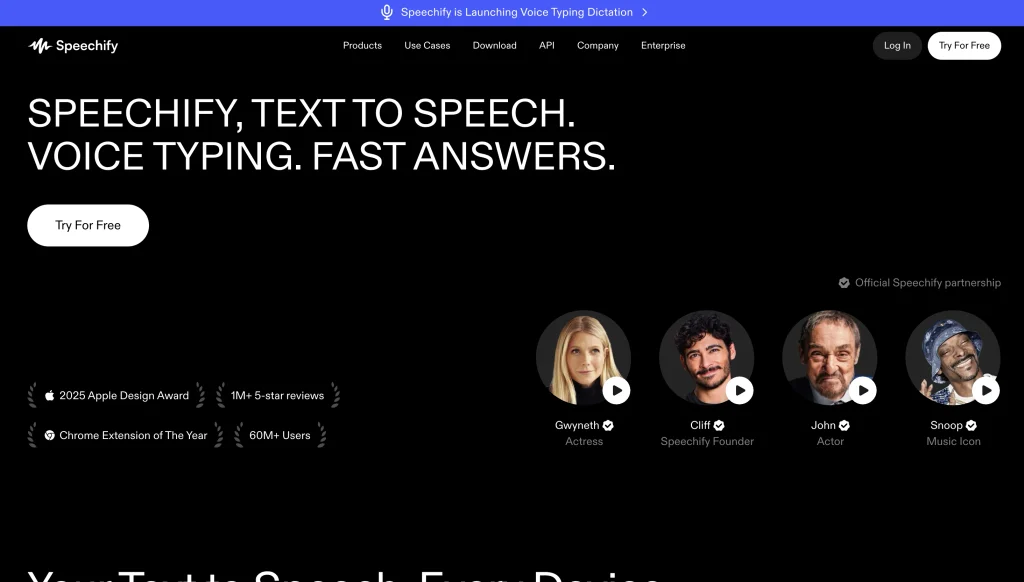
Speechify is a text-to-speech converter that allows you to listen to your written words, the product has many different voices out there and reading options available which makes it an ideal solution for people willing to have a read even while driving or working.
Pricing: It’s free to use for the most basic version, with 10 of its voices available. The premium plan price is $29 per month or $139 per year if paid annually.
Best for: Listening to articles, documents, and study material.
11. Hume AI
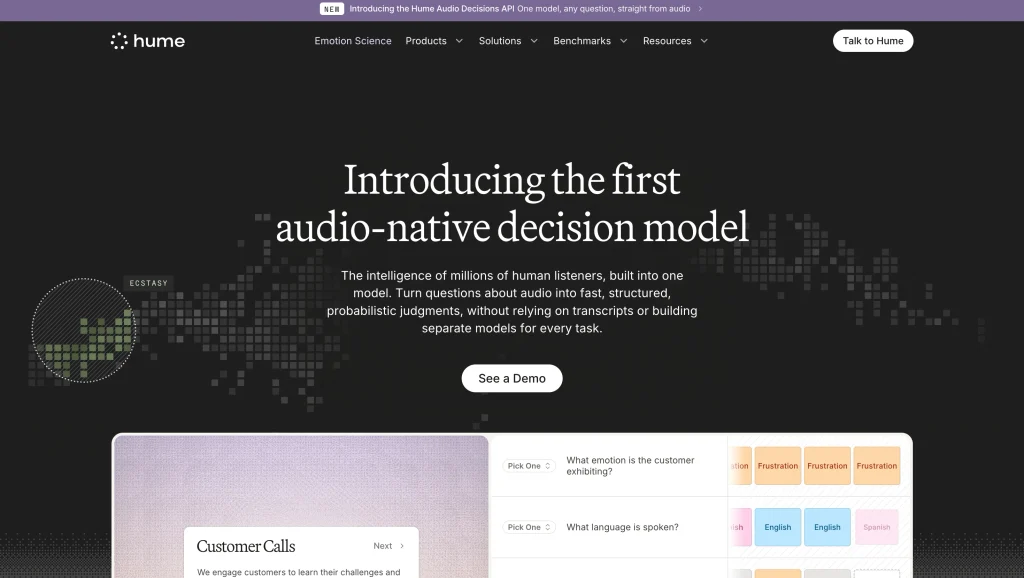
Hume AI creates voice technologies that emphasize emotional communication. The company’s Empathic Voice Interface (EVI) can reply to voice inquiries with expressive speech. Developers can experiment with the technology as they create their voice solutions that involve more than basic text-to-speech functionalities.
Pricing: Free plan costs $0/month, Starter $3/month, Creator $14/month after the first month of introductory pricing ($7), Pro $70/month, Scale $200/month, Business $500/month. Enterprise pricing is customized.
Best for: Developers seeking to build emotional and expressive voice interfaces.
Best AI voice apps for real-time conversations
These apps let users speak directly with AI rather than generate audio from a written script. They work well for everyday questions, brainstorming, learning, and hands-free interactions.
12. ChatGPT
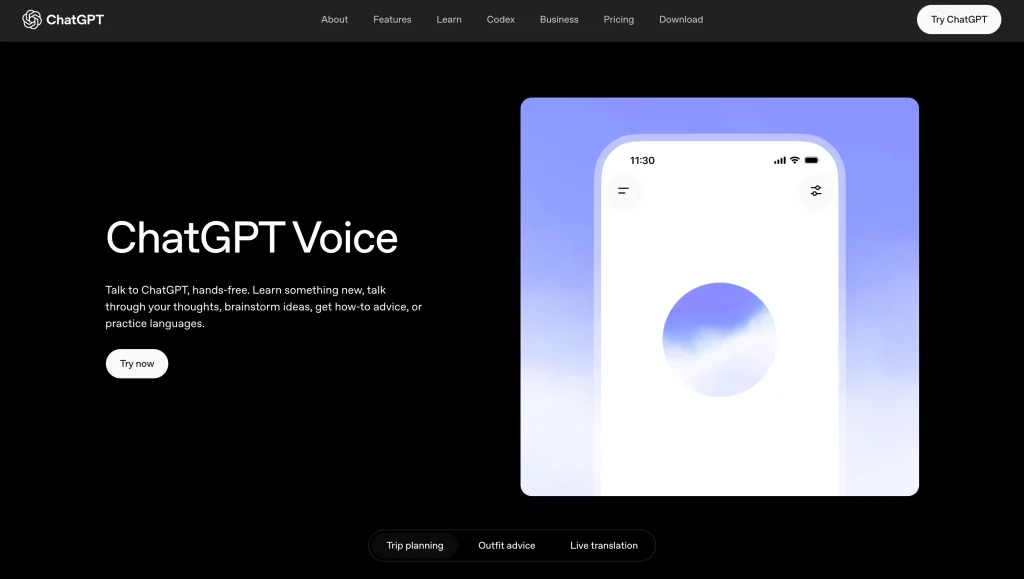
ChatGPT’s voice mode allows users to have spoken conversations with the application. Users can ask questions and talk about ideas with the system using audio input instead of typing. The feature allows users to utilize ChatGPT in a variety of situations: from everyday assistance to language practice or brainstorming sessions when speaking is simpler than writing.
If you want to explore more free AI tools for conversations, check out our guide to free AI tools like ChatGPT that you can use without logging in.
Pricing: India: Free, Go at ₹399/month and at ₹1,999/month. US: Free, Go at $8/month and at $20/month.
Best for: Daily use and AI assistance.
13. Google Gemini
With Google Gemini, users can now engage in spoken conversations with its AI assistant using the newly introduced Gemini Live. In this great platform, users will have the ability to ask follow-up questions, learn more about the subjects of their interest, and communicate their ideas coherently. Since it is a part of Google’s ecosystem, this platform can also benefit those already in use of Google’s services.
Google is also expanding its AI capabilities beyond voice, as explored in our guide to Google Genie 4.
Pricing: India: Free, AI Plus at ₹399/month, AI Pro at ₹1,950/month, and AI Ultra at ₹6,500/month. US: Free, AI Plus at $7.99/month, AI Pro at $19.99/month, and AI Ultra at $249.99/month.
Best for: Users looking for a voice assistant that can connect to the whole system of Google services.
14. Pi AI
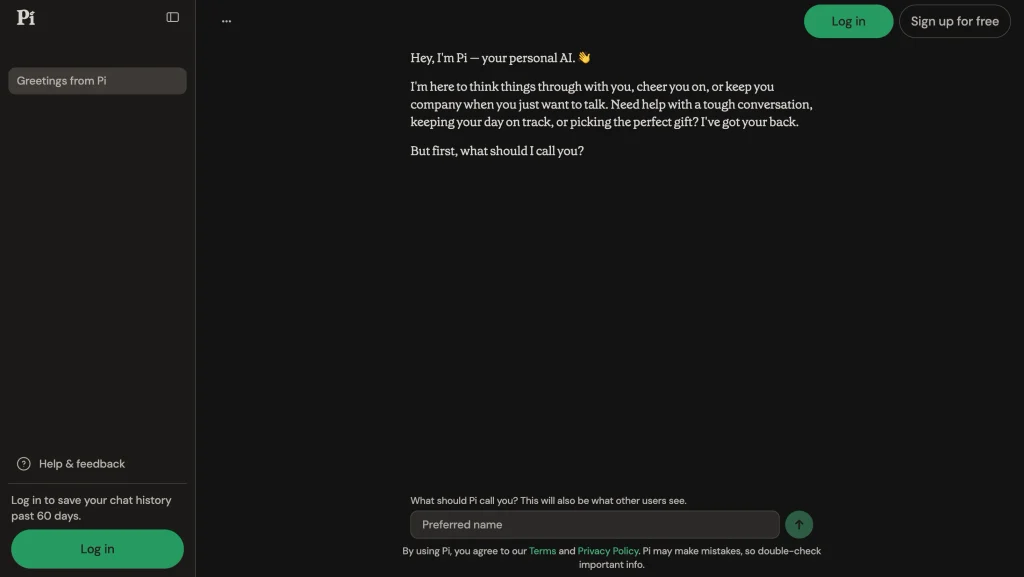
Pi AI emphasizes friendly and conversational interactions. Users can discuss their thoughts, ask questions, and talk about daily life. The voice approach makes Pi attractive for those who prefer software based on interaction rather than on different commands.
Pricing: Free to use. There is no subscription fee mentioned in the iOS App Store, providing access to Pi at no cost.
Best for: Casual conversations and discussing ideas.
How AI voice technology keeps getting better
AI voice systems continue to improve across several areas. Better speech generation helps voices sound more expressive, while faster processing makes conversations feel less delayed.
- Real-time processing: Faster systems reduce the gap between a user’s speech and the AI’s response. This helps conversations flow without long pauses.
- More expressive speech: Voice models can vary their delivery instead of reading every sentence in the same tone. This makes narration and conversation sound less uniform.
- Better turn-taking: Voice agents can detect when someone starts speaking, pause their response, and give the user space to continue.
- Context-aware responses: Models can use earlier parts of a conversation to shape their next response instead of treating each message as a separate request.
- Emotion-aware interaction: Some systems analyse vocal cues and adapt their responses to the conversation. This can make interactions feel more responsive, although emotion detection is not the same as reliably understanding someone’s feelings.
These improvements do not make AI voices human. They make the technology better at handling the small details that people expect from a conversation.
The growing interest in this technology is also reflected in the AI voice agents market’s projected growth, as more businesses explore voice-based automation.
What should you look for when choosing an AI voice platform or app?
The right choice depends on whether you want to automate calls, create voiceovers, or talk to an AI assistant. Before choosing a product, consider these factors:
- Voice quality: Listen for natural pronunciation, varied intonation, and comfortable pacing.
- Conversational ability: Check whether the system can handle follow-up questions and maintain context.
- Interruptions: Test whether you can speak while the AI is responding and whether it adjusts smoothly.
- Emotional expression: Look for appropriate changes in tone rather than exaggerated or repetitive delivery.
- Response speed: Long delays can make even a realistic voice feel unnatural.
- Customisation: Check whether you can adjust voices, accents, and speaking styles.
- Language support: Make sure the platform supports the languages and accents you need.
- Privacy: Review how the provider stores voice recordings, processes personal information, and uses conversation data.
- Pricing: Compare subscription costs, usage limits, API charges, and extra fees. A low starting price does not always mean a low overall cost.
For businesses, integration options and call-handling reliability also matter. For individual users, ease of use, voice availability, and subscription limits may carry more weight.
The future of AI voices lies between the words
Voice technology is evolving from its earlier versions that simply read text. Voice platforms now have introduced conversation timing, expressiveness, context, and the ability to react if the speaker suddenly changes direction with his speech.
Going forward, making the voice technology sound clearer is not enough. The first step would be to enable the voice systems to react appropriately to a person’s nonsystematic speech behavior. The speech process may become successful if it uses pauses, changes in tone, etc.
Customers may benefit from the voice technologies due to their use in customer service,/audio broadcasts, or conversational AI applications. The most effective systems will be the ones that care about the way people think and talk.
FAQs
Murf AI and Fish Audio are useful options for converting written scripts into spoken audio. Murf AI focuses on voiceovers for presentations, videos, and training content, while Fish Audio offers expressive speech generation and voice cloning.
Vapi and Cartesia are worth exploring. Vapi provides tools for building complete AI voice agents, while Cartesia focuses on fast speech generation that developers can integrate into real-time applications.
Yes. Platforms such as ElevenLabs, Fish Audio, and Murf AI offer voice cloning or custom voice capabilities. The available features and requirements differ, and some may require a paid plan or voice verification.
Retell AI, Bland AI, Synthflow AI, and PolyAI are designed for business conversations. They can help companies automate incoming calls, answer common questions, schedule appointments, and route customers to human representatives.
Many AI voice generators allow commercial use under specific subscription plans and licensing terms. However, usage rights differ between providers and may depend on the voice, plan, and type of content. Always review the platform’s commercial usage policy before publishing or monetising generated audio.
