

AI writing tools have completely transformed content creation in 2026. Bloggers, marketers, and businesses now rely on these tools to create high-quality content faster and more efficiently. From SEO blog posts to social media content, AI tools help scale content production without sacrificing quality.
But one important question remains. Should you use free AI writing tools or invest in paid ones?
This article provides a comprehensive comparison of free vs. paid AI writing tools so you can clearly understand which option works best for your needs.
Understanding free vs paid AI writing tools comparison
Free AI writing tools, to begin with, cater to people who are just starting and to non-professionals. While you can try out creating content, you are still restricted by several limitations.
On the other hand, paid AI writing tools serve professionals and businesses. As a result, you gain access to better AI technology and advanced SEO tools.
In simple terms, free tools give you a head start, whereas paid tools take your business further.
You should know the basic difference first before deciding on which tool to use.
Along with blog writing tools, you can also explore the top free AI tools for content creation to expand your workflow.
Best free vs. paid AI blog writing tools 2026 guide
To begin with, here is a detailed breakdown of the best free vs. paid AI blog writing tools, including their features, pricing, and use cases.
1. ChatGPT (Free + Paid)
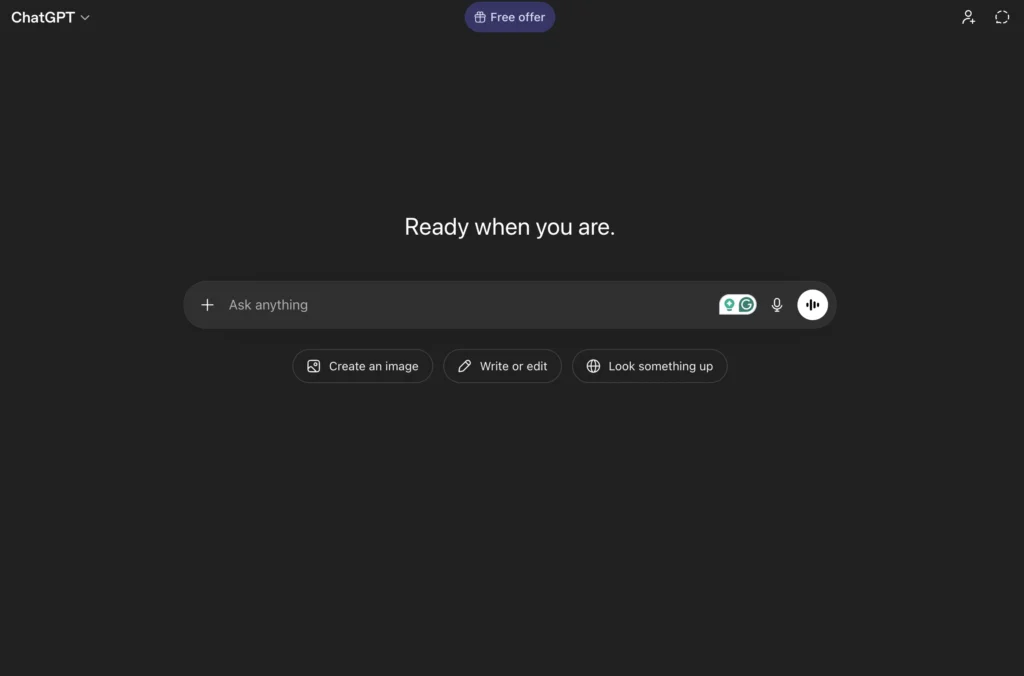
First of all, ChatGPT stands out as one of the most flexible AI blog writing tools available. It allows you to generate outlines, expand sections, and even create full blog posts across different niches. Moreover, it adapts to your tone and style when you provide clear prompts.
Key features
- Full blog generation and expansion
- Tone customization
- SEO structuring with prompts
- Multi-purpose writing assistant
Free features
- Basic model access
- Limited usage
Paid features
- Access to advanced models with better reasoning
- Moreover, with faster responses and priority access
- Improved long-form content quality
Pricing: Paid plan starts at $20/month
Best for: All-purpose blog writing and flexible content creation
2. Claude (Free + Paid)
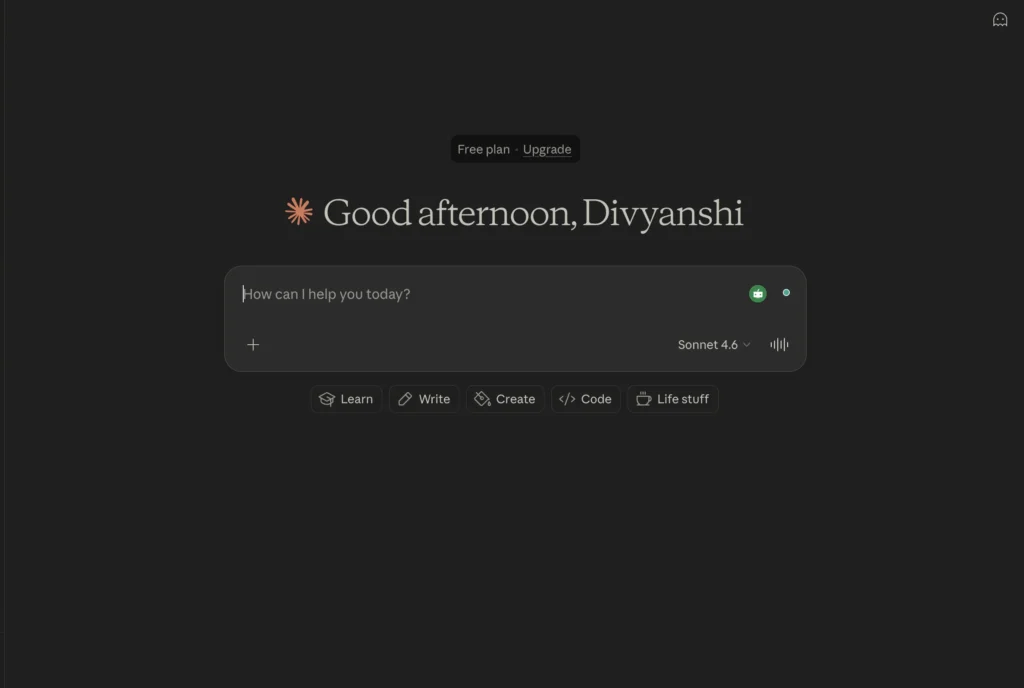
Similarly, Claude focuses on producing natural and human-like blog content. It maintains strong structure and flow, which makes it ideal for long-form writing. In addition, it reduces the need for heavy editing.
Key features
- Long-form blog writing
- Natural tone and readability
- Strong context retention
- Structured content flow
Free features
- Limited daily usage
- High-quality outputs
Paid features
- Larger context window for long blogs
- Better consistency and depth
- Higher usage limits
Pricing: Paid plan starts at $20/month
Best for: Writers who want human-like blog content with minimal editing
3. Writesonic (Free + Paid)

In contrast to general tools, Writesonic focuses specifically on SEO blog writing. It helps you generate structured articles with proper headings and keyword placement. Therefore, it works well for bloggers targeting search rankings.
Key features
- SEO blog generation
- Article writer with structure
- Keyword optimization
- Fast content creation
Free features
- Limited credits
- Basic article generation
Paid features
- Full-length article generation
- Advanced SEO optimization tools
- Higher content limits
Pricing: Paid plans start at $16 to $19/month
Best for: SEO bloggers and content marketers
4. Copy.ai (Free + Paid)
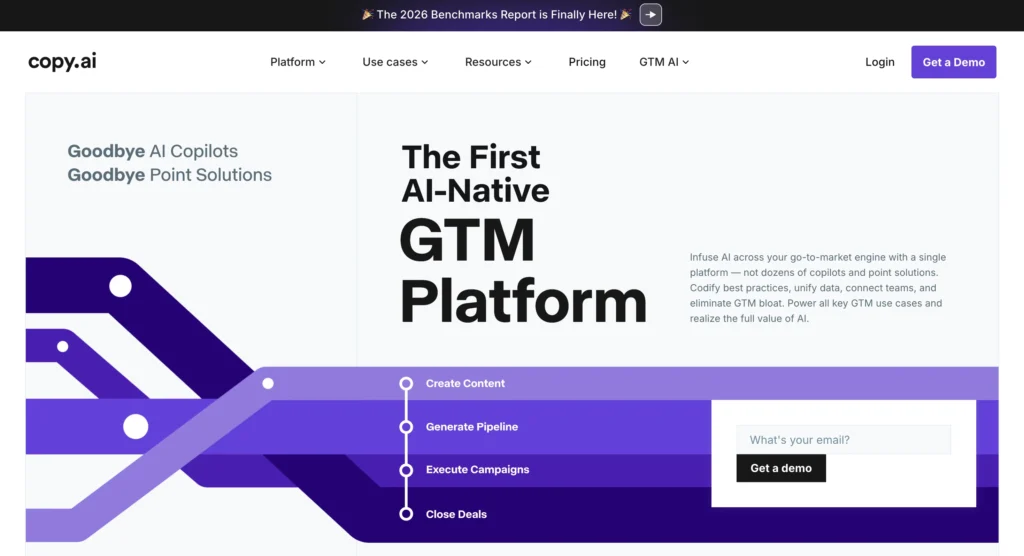
Copy.ai assists in creating sections of blogs, outlines, and content rapidly with the help of templates and workflows. Although it works well on short content pieces, it can also be useful in blog writing if utilized correctly. It also offers automation capabilities for scaling content.
Key features
- Blogging outline creation
- Sections for blogs
- Content workflow automation
- Workflow-based content creation
Free features
- Monthly word limit
- Basic templates
Paid features
- Unlimited content generation
- Workflow automation tools
- Brand voice and team features
Pricing: The paid plan starts from $36-$49/month
Best for: Drafting blog content
5. Rytr (Free + Paid)
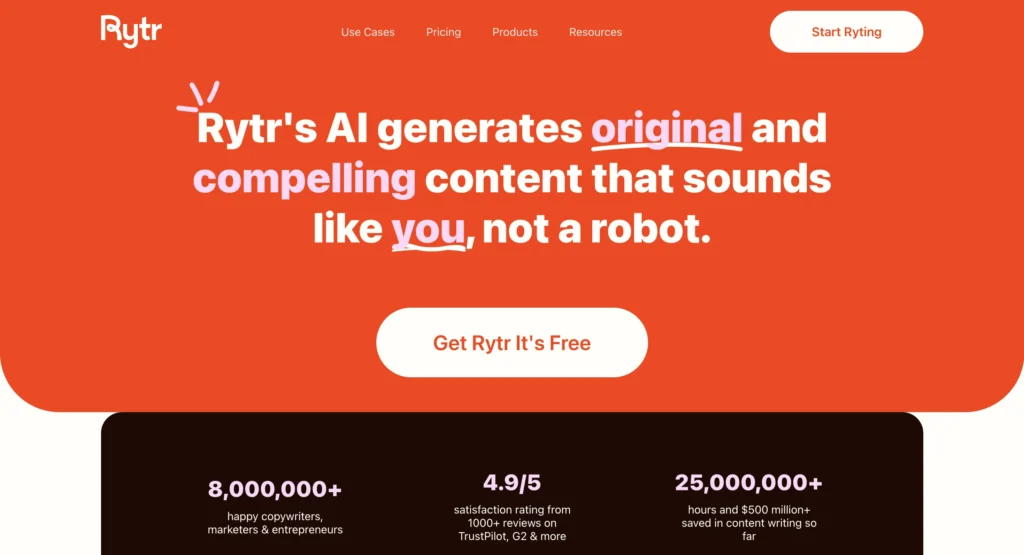
Next, Rytr offers a simple and beginner-friendly blogging experience. It allows users to generate quick drafts using templates and tone settings. As a result, it works well for users who want a low-cost solution.
Key features
- Blog templates
- Tone selection
- Quick draft generation
- Simple interface
Free features
- Limited characters
- Basic templates
Paid features
- Unlimited content generation
- More tones and use cases
- Priority support
Pricing: Paid plans start at $9/month
Best for: Beginners and budget bloggers
6. Gemini (Free + Paid tiers)
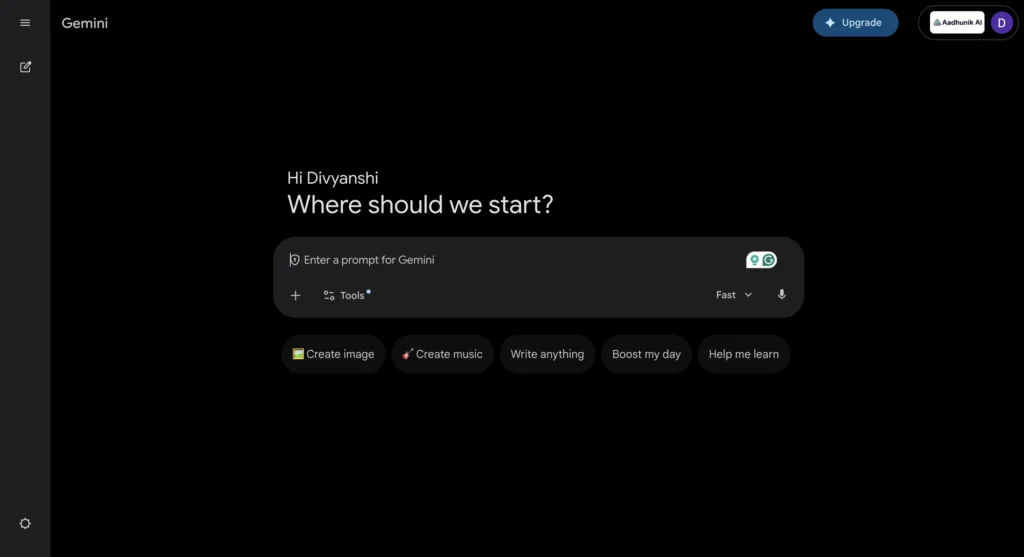
Gemini is good at creating blog content that is based on research and facts. It has Google integration, which makes it effective in producing structured and researched blog content. Additionally, it suits well for informational and research blogs.
Key features
- Content generation based on research
- Google integration
- Context handling
- Fact-based writing
Free features: Basic AI access
Paid features
- Advanced reasoning and deeper outputs
- Better integrations and performance
Pricing: $20 per month, approximately
Best for: Blogs based on research
7. Notion AI (Free + Paid)

At the same time, Notion AI combines blog writing with content organization. It allows you to write, edit, and manage blog content in one place. Consequently, it improves productivity and workflow efficiency.
Key features
- Blog writing inside the workspace
- Content structuring
- Idea expansion
- Collaboration tools
Free features: Limited AI usage
Paid features
- Unlimited AI usage
- Better collaboration features
- Enhanced productivity tools
Pricing: Paid plan starts at $10/month
Best for: Bloggers who want writing plus organization
8. Scalenut (Free + Paid)

Scalenut helps you create SEO-focused blog content with built-in research and optimization features. Moreover, it generates blog outlines, writes long-form content, and improves rankings using AI-driven insights. Additionally, it combines writing and SEO in one workflow, which saves time.
Key features
- AI blog writer and cruise mode
- SEO content optimization
- Keyword planning and research
- Content scoring
Free features
- Limited trial access
- Basic content generation
Paid features
- Cruise Mode for automated blog writing
- Advanced SEO optimization and SERP insights
- Full content lifecycle tools from research to publishing
- Higher usage limits and automation
Pricing: Paid plans start at $19/month
Best for: SEO bloggers who want research + writing in one tool
9. Frase (Paid + Limited Free Trial)
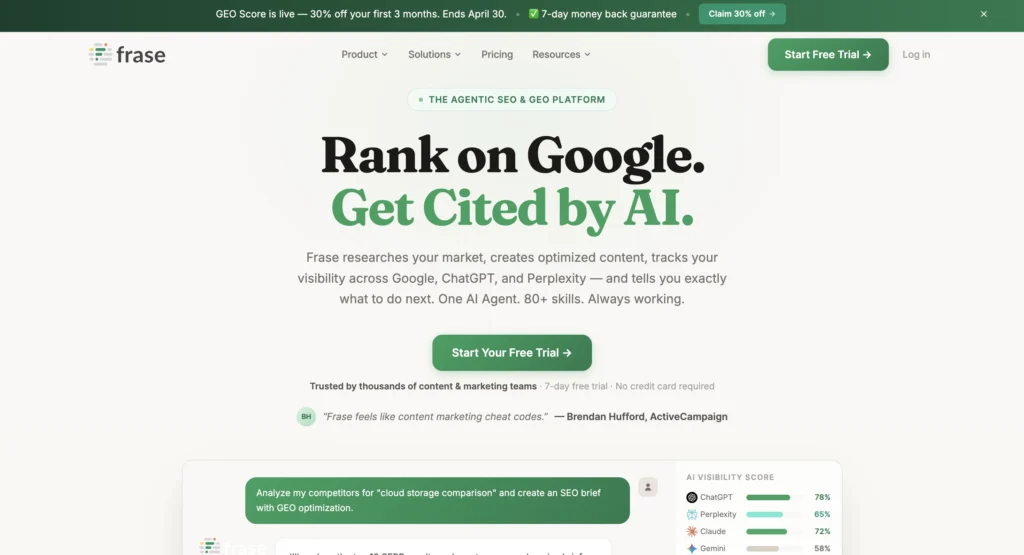
Frase helps you create SEO-optimized blog content by generating briefs and outlines based on search data. It simplifies research and speeds up blog writing significantly.
Key features
- Content briefs
- SEO research
- AI writing
Free features: Limited trial
Paid features
- Full AI writing
- SERP-based content briefs
- Optimization tools
Pricing: Starts at $14 to $45/month
Best for: SEO research and blog planning.
10. Simplified (Free + Paid)

Simplified helps you create blog content quickly using AI templates and long-form writing tools. It allows you to generate full blog posts, expand sections, and optimize content within one platform. Additionally, it combines writing, design, and publishing, which makes it useful for content creators.
Key features
- AI blog writer and long-form generator
- Content expansion and rewriting
- Built-in templates for blogs
- All-in-one content creation platform
Free features
- Limited AI words per month
- Access to basic blog writing tools
Paid features
- Higher word limits
- Advanced templates
- Content scaling features
Pricing: Paid plans start at $15/month
Best for: Bloggers who want an all-in-one free + paid writing tool
Once your blog content is ready, you can also improve engagement by creating stunning thumbnails and social media graphics using free AI tools.
Key differences in free vs paid AI writing tools
To begin with, you need to understand how free and paid tools differ in real-world usage. While both help with content creation, they deliver very different results.
| Factor | Free AI Writing Tools | Paid AI Writing Tools |
|---|---|---|
| Output quality | To start with, free tools generate basic content around 800–1200 words, but they often need heavy editing and may lack consistency in long-form blogs. | In comparison, paid tools produce structured and high-quality content of 2000+ words with better flow, tone consistency, and SEO readiness. |
| Usage limits | For example, ChatGPT free has limited model access, Rytr allows around 10,000 characters per month, and Copy.ai offers only a few thousand words monthly. | Paid plans usually allow 100,000+ words per month or even near-unlimited usage depending on the tier. |
| SEO capability | Generally, free tools only support basic keyword usage, and they do not provide SERP analysis or advanced optimization features. | Meanwhile, paid tools include SEO features like keyword scoring, content grading, and competitor insights for better rankings. |
| Workflow efficiency | Users often need to manually structure and edit content, which can take around 2–4 hours per blog. | However, paid tools streamline the process with templates and automation, reducing writing time by up to 60–80%. |
| Use case | Overall, free tools are suitable for beginners or hobby bloggers publishing only a few posts per month. | Ultimately, paid tools are ideal for professionals, agencies, and businesses producing content at scale. |
Best AI writing tools 2026
Now that you understand the differences, here is a quick summary of the best AI writing tools 2026:
- Best free overall tool → ChatGPT Free
- Best free long-form tool → Claude Free
- Best free research tool → Gemini Free
- Best paid SEO tool → Writesonic
- Best workflow tool → Notion AI
Which should you choose?
At this point, you might wonder which option works best for you. The answer depends on your goals.
- If you are a beginner, you should start with free tools like ChatGPT and Claude. Additionally, this way, you can learn without investing money.
- If you are a blogger, you should combine free and paid tools for a better balance. For example, you can use ChatGPT for drafting and Writesonic for SEO optimization.
- If you run a business, you should invest in paid tools to improve content quality and efficiency.
- If you manage an agency, you should use a full paid stack to scale content production and maintain consistency.
Free vs. paid AI writing tools: comparison made simple
To sum up, free AI writing tools are powerful enough to help you get started. However, paid tools unlock professional-level speed, better SEO optimization, and higher-quality content.
Ultimately, the best strategy in 2026 is not choosing one over the other. Instead, you should combine both based on your content needs and growth stage. By doing so, you can maximize efficiency and achieve better results in your blogging journey.
Finally, to improve quality, don’t miss this guide on how to make AI content sound human.
FAQs
Free tools offer basic features; however, paid tools provide better quality and SEO optimization.
Yes, they work well for beginners, but they have limits as your content needs grow.
Currently, ChatGPT and Claude are the top free options.
Yes, they include optimization features; therefore, they help improve rankings.
Yes, combining both saves time and improves overall content quality.
